Chord Progressions Explained for GCSE & A-Level Music Composition
 Declan Plummer
Learn chord qualities, inversions, cadences and circle of fifths progressions for stronger GCSE and A-Level music compositions.
Understanding Chords And Chord Progressions
Chords and chord progressions form the harmonic foundation of music. By understanding chord qualities, inversions, and how chords naturally move using the circle of fifths, students can create structured, expressive compositions that sound coherent, balanced, and stylistically appropriate for GCSE and A-Level music.
When composing music, harmony is one of the most powerful tools available. It shapes emotion, direction, and musical clarity. Without a clear harmonic plan, even strong melodies can feel disconnected or incomplete. This is why learning how chords function—and how they relate to each other—is essential.
In this lesson, we explore chords within a key, how their qualities are built, and how they connect through common progressions. We will also look at inversions, the circle of fifths, and practical strategies for applying these ideas in your own compositions.
- Chords are built using intervals that determine their quality (major, minor, diminished)
- Chord progressions follow predictable patterns based on harmonic function
- The circle of fifths provides a reliable guide for smooth harmonic movement
Chord Qualities In A Major Key
In any major key, chords are built from the notes of the scale. Each chord has a specific quality depending on the intervals between its notes. Understanding these qualities allows you to predict how each chord will sound and behave within a progression.
For example, in the key of C major, the chords follow a clear pattern: major chords on I, IV, and V; minor chords on ii, iii, and vi; and a diminished chord on vii°. This pattern remains consistent across all major keys.
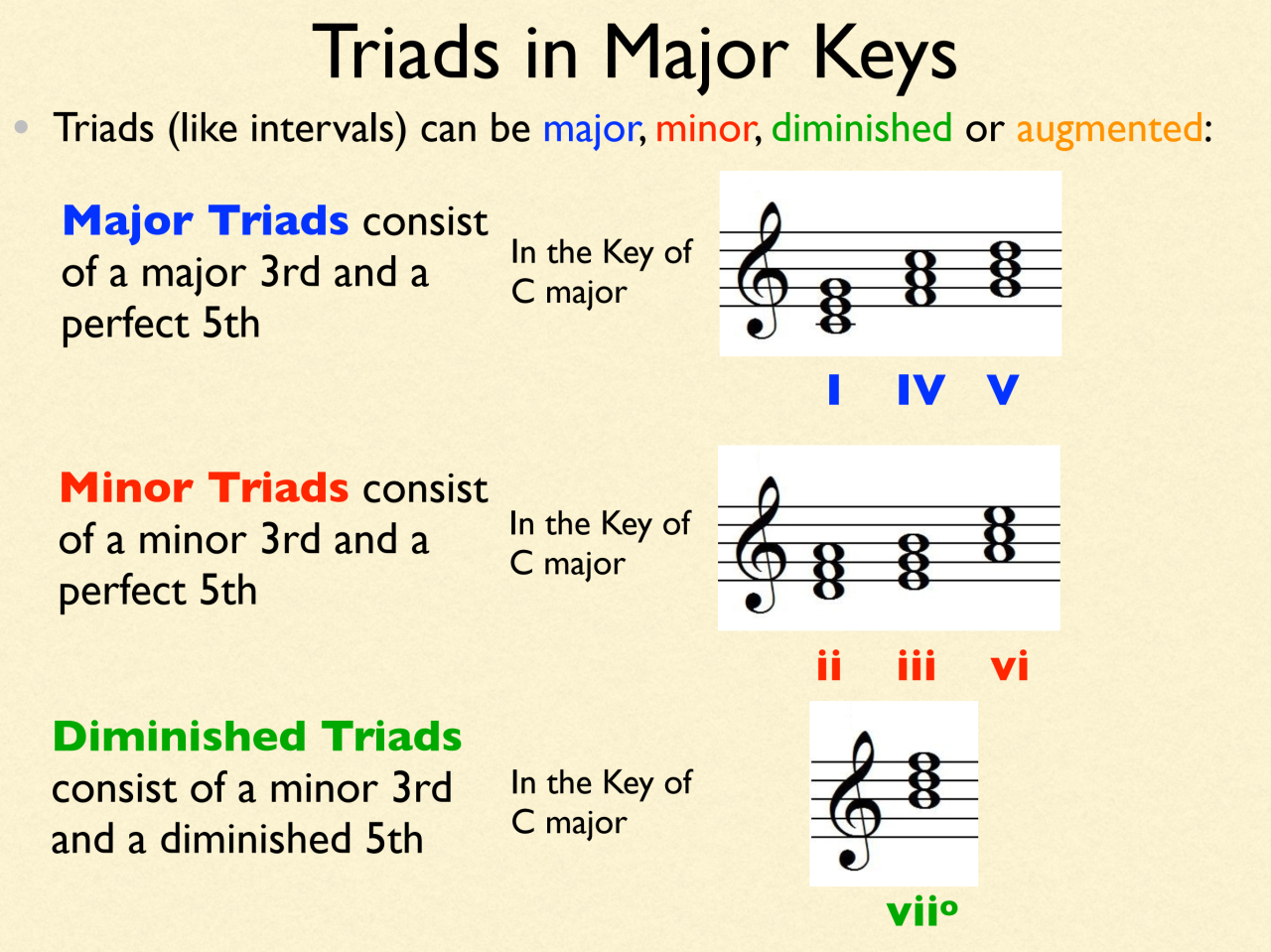
Insight: Roman numerals are used to label chords. Capital numerals indicate major chords, lowercase indicate minor, and a small circle shows diminished chords.
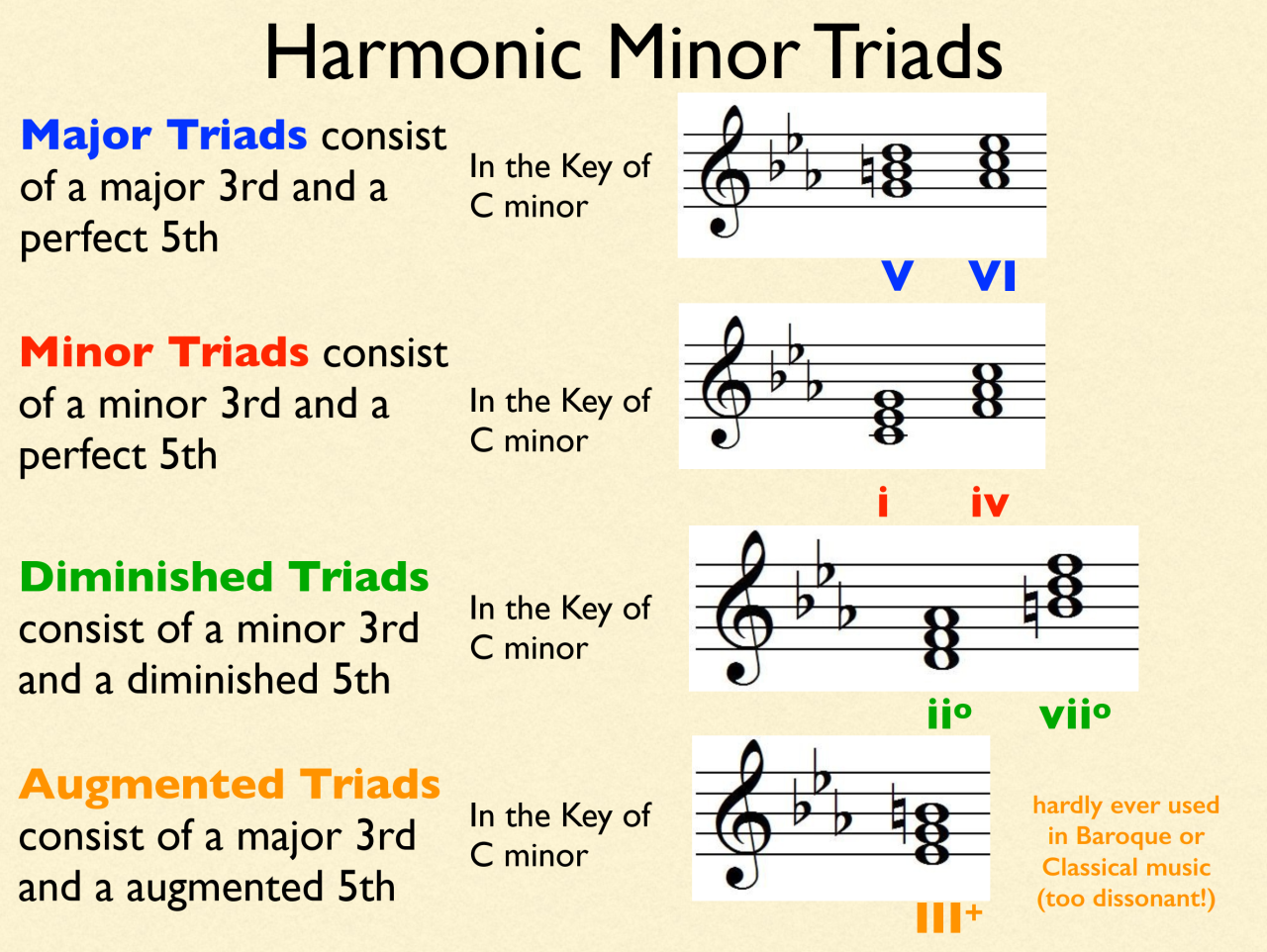
How Chord Intervals Define Quality
Chord quality is determined by intervals. A major chord contains a major third and perfect fifth, while a minor chord contains a minor third and perfect fifth. Diminished chords contain a minor third and diminished fifth, creating a more unstable sound.
Practice Tip: Regularly practise identifying intervals. This will make it much easier to build chords accurately and recognise their sound in compositions.
Understanding Chord Inversions
Chord inversions occur when the notes of a chord are rearranged so that a note other than the root is in the bass. This allows for smoother bass movement and more fluid harmonic transitions.

First inversion places the third in the bass, while second inversion places the fifth in the bass. These variations are essential for creating stepwise bass lines and avoiding large, awkward jumps.
Pro Tip: Use inversions to create smooth voice leading. Stepwise bass movement often sounds more musical than large leaps.
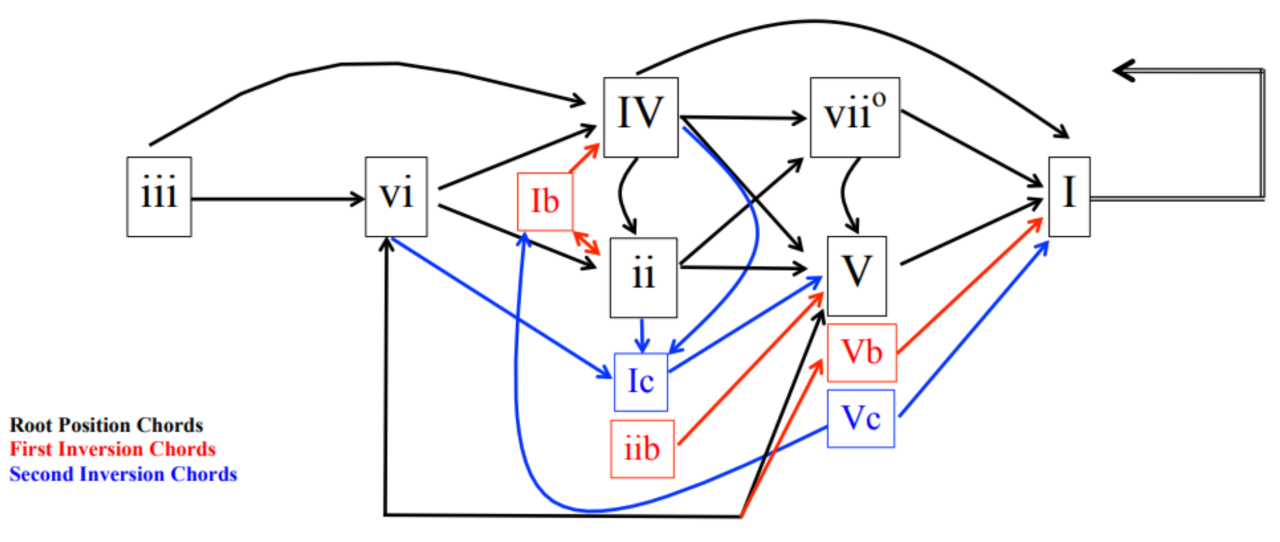
When To Use Second Inversion Chords
Second inversion chords are more restricted in use. They are most commonly applied to primary triads (I, IV, V) and are often used at cadences to strengthen harmonic resolution.
Common Mistake: Avoid overusing second inversion chords. They can sound unstable if not placed carefully, particularly outside cadential contexts.
Chord Progressions And The Circle Of Fifths
Chord progressions describe how chords move from one to another. The circle of fifths provides a powerful framework for understanding these movements, as chords often progress by descending fifths.
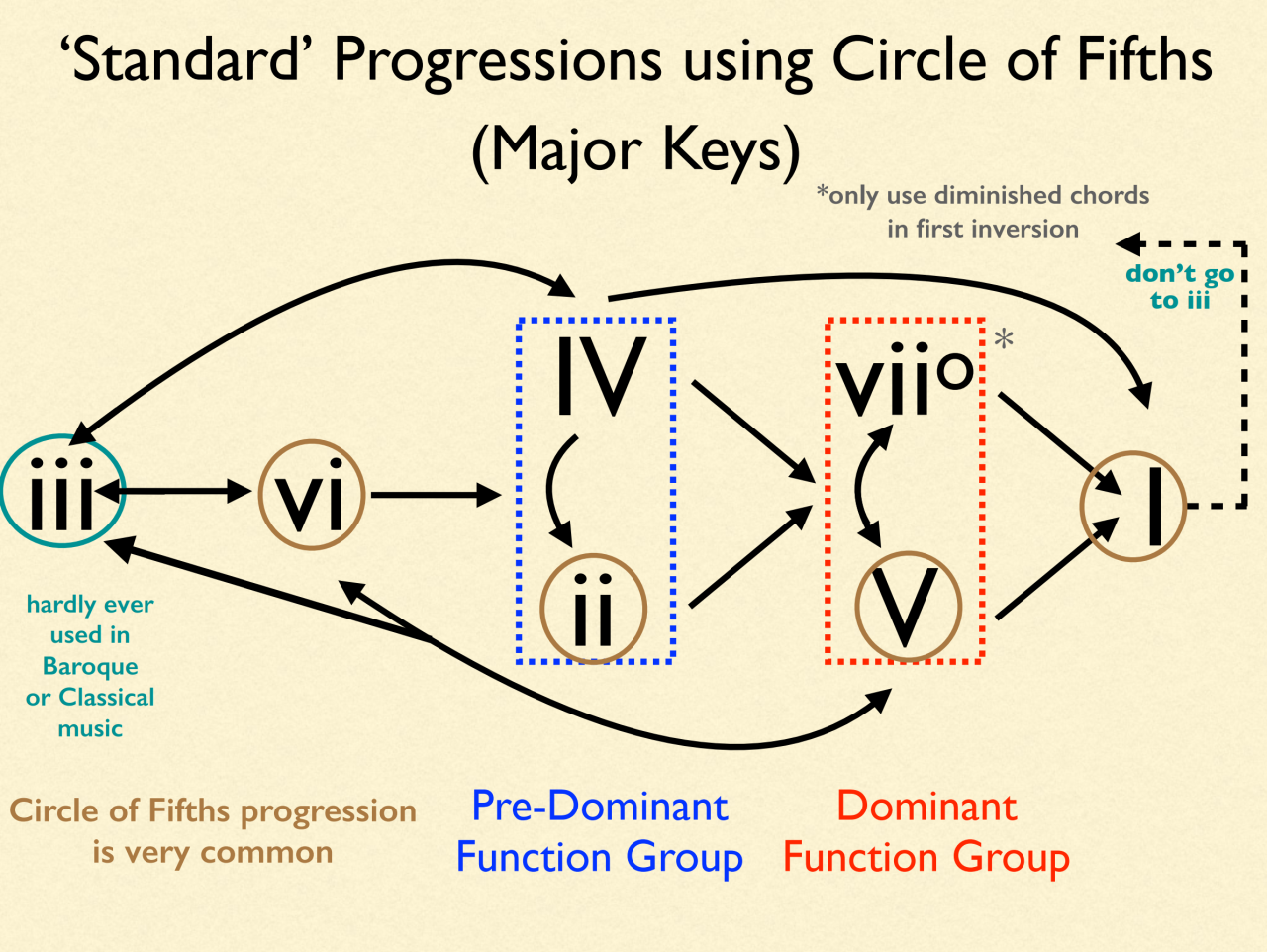
For example, the progression vi → ii → V → I is extremely common. Each chord moves down a fifth, creating a strong sense of direction and resolution.
| Chord | Function | Movement |
|---|---|---|
| vi | Submediant | Moves to ii |
| ii | Predominant | Moves to V |
| V | Dominant | Resolves to I |
| I | Tonic | Resolution point |
Functional Harmony Explained
Chords can be grouped by function. The tonic (I) provides stability, the dominant (V and vii°) creates tension, and the predominant (ii and IV) prepares movement toward the dominant.
Understanding these roles helps you create progressions that feel natural and balanced, rather than random or disconnected.
Insight: Dominant chords strongly pull toward the tonic, especially when the leading note resolves upwards.
Common Cadences In Music
Cadences are harmonic endings that define phrases. The most common is the perfect cadence (V–I), which creates a strong sense of resolution. Plagal cadences (IV–I) offer a softer, more reflective ending.
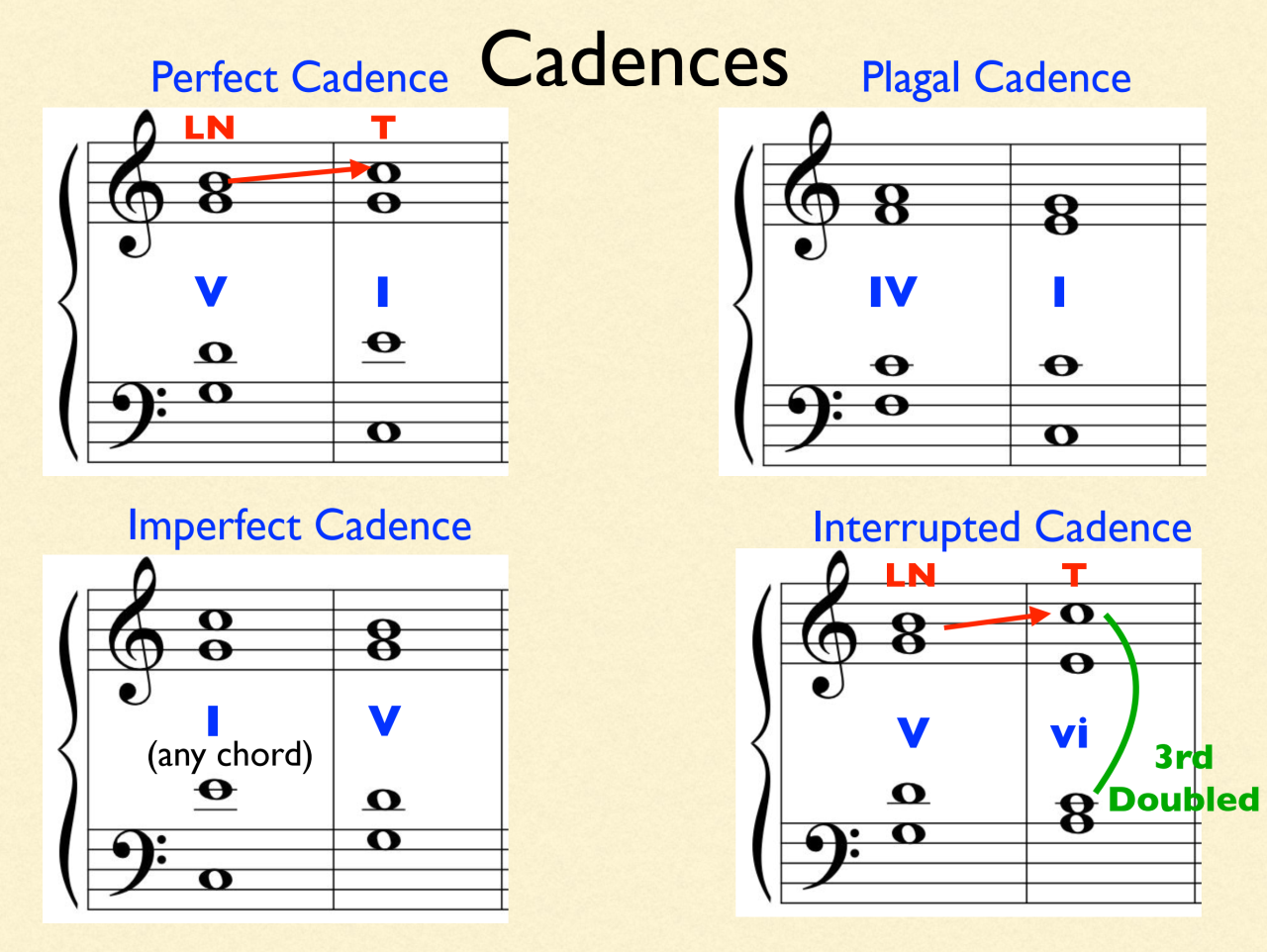
Interrupted cadences (V–vi) create surprise by avoiding resolution, while imperfect cadences end on the dominant, leaving the phrase open.
Practice Tip: Try writing short phrases using each cadence type to understand their emotional effect.
Composing With Chord Progressions
When composing, think of chord progressions as a guide rather than a strict rule. They help you structure your harmony, but you can adapt them creatively depending on style and intention.
Strong compositions often begin with a clear harmonic plan. Knowing where your music is heading allows you to shape phrases, build tension, and create satisfying resolutions.
Pro Tip: If you feel stuck, return to a simple progression like ii–V–I. It provides a reliable structure to build from.
Step-By-Step Practice Routine
Begin by choosing a key and writing out all seven chords using Roman numerals. Play each chord on your instrument and listen carefully to its quality. Then practise moving between chords using common progressions such as I–IV–V–I.
Next, introduce inversions to create smoother bass lines. Focus on stepwise movement rather than large jumps. Practise the vi–ii–V–I progression until it feels natural under your fingers.
Once comfortable, begin composing short phrases. Aim to include at least one cadence. Experiment with different endings to understand how harmony shapes musical meaning.
Finally, review your work. Check for smooth voice leading, avoid parallel fifths and octaves, and ensure your chord choices support the melody effectively.
Key Takeaways
✅ Chord qualities are determined by intervals and follow consistent patterns in major keys
✅ The circle of fifths provides a clear framework for building strong chord progressions
✅ Inversions improve voice leading and create smoother bass movement
✅ Functional harmony helps chords move logically toward resolution
✅ Practising standard progressions builds confidence in composition
FAQ
What is the most important chord in a key?
The tonic chord (I) is the most important because it provides stability and resolution. Most progressions ultimately lead back to it.
Why is the V–I progression so common?
It creates a strong sense of resolution due to the leading note in the dominant chord resolving to the tonic.
Should I memorise all chord progressions?
Not necessarily. It is more useful to understand the patterns and functions behind them so you can apply them flexibly.
When should I use inversions?
Use inversions to smooth out bass movement and improve voice leading, especially when connecting chords stepwise.
Can I break these rules in composition?
Yes. These guidelines help you create strong foundations, but creative choices can be made once you understand them fully.
To take your learning to the next level,
check out some of these amazing Courses & Apps






Categories: : GCSE & A-Level Music
Did this article answer all your questions?
If you have any questions, or you want to learn more,
Click the Picture Below to Join the Community for FREE!