How to Compose Melodic Motion for GCSE & A-Level Music
 Declan Plummer
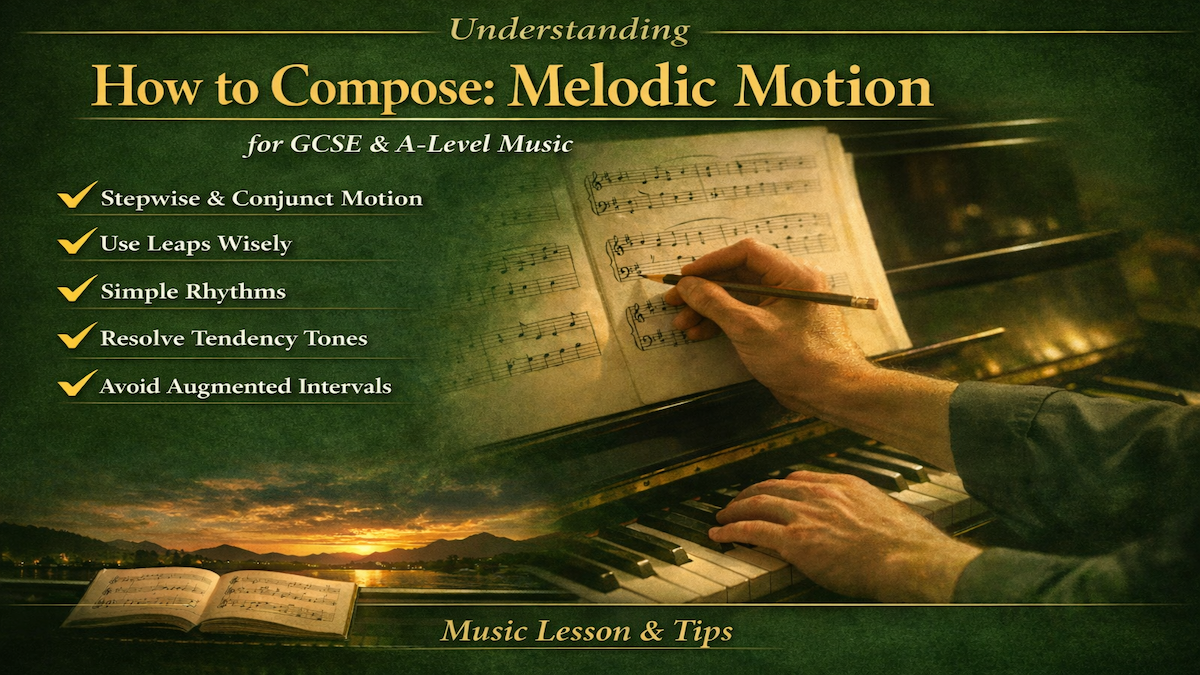
Learn melodic motion in music composition with clear GCSE & A-Level tips on stepwise movement, leaps, and tendency tones.
Understanding Melodic Motion In Composition
Melodic motion refers to how a melody moves from note to note, shaping its character, direction, and musical meaning. By balancing stepwise movement, leaps, and resolution tendencies, students can create melodies that sound coherent, expressive, and stylistically appropriate for GCSE and A-Level music composition.
When learning how to compose a melody, one of the most important foundations is understanding how notes move in relation to one another. Melodic motion is not simply about choosing pitches—it is about shaping musical direction, creating balance, and guiding the listener’s ear in a logical and satisfying way.
At GCSE and A-Level, examiners are not only listening for creativity, but also for control. A well-shaped melody demonstrates clear understanding of musical structure, phrasing, and tonal direction. Without this, even technically correct work can sound unfocused or unconvincing.
- Use stepwise (conjunct) motion to create smooth, natural melodic shape
- Include occasional leaps to add character and interest
- Balance large leaps with stepwise movement in the opposite direction
- Resolve tendency tones correctly to maintain tonal clarity
- Avoid excessive chromatic intervals and uncontrolled disjunct motion
Conjunct Motion And Melodic Shape
Conjunct motion describes melodies that move stepwise, either by seconds or repeated notes. This is the most natural and commonly used type of melodic movement in tonal music, as it creates a sense of flow and continuity.

Most effective melodies contain a clear sense of shape—often resembling a curve that rises and falls. Stepwise motion makes it easier to achieve this, allowing the melody to feel connected and purposeful rather than fragmented.
Start your melody using mostly stepwise movement. This gives you a strong structural foundation before adding more complex elements such as leaps or rhythmic variation.
Why Stepwise Motion Sounds Natural
Stepwise movement closely mirrors how we naturally sing. Because each note moves only a small distance, the melody feels predictable and easy to follow. This predictability is essential in early stages of composition, especially when clarity is more important than complexity.
Using Leaps Effectively In Melody Writing
While stepwise motion provides stability, leaps introduce contrast and character. A leap occurs when a melody moves by an interval larger than a second, such as a third, fourth, or fifth.
Used correctly, leaps can highlight important musical moments, emphasise harmonic structure, and add emotional depth to a melody.
Strong melodies often combine stepwise motion with carefully placed leaps. The contrast between smooth movement and sudden jumps is what makes a melody memorable
Avoiding Excessive Disjunct Motion
Avoid making successive same-direction leaps, unless they outline a triad. A melody made entirely of leaps is described as disjunct. While this can be effective in certain advanced contexts, it often results in a lack of cohesion for beginner composers. Without stepwise movement, the melody may sound disconnected or difficult to follow.

Writing too many leaps in succession without clear direction or harmonic support. This can make the melody sound more like an accompaniment than a coherent musical line.
The Rule Of Compensation In Melody
One of the most important principles in melodic writing is the rule of compensation. When a melody leaps by a large interval—typically a fifth or greater—it should be followed by stepwise movement in the opposite direction.
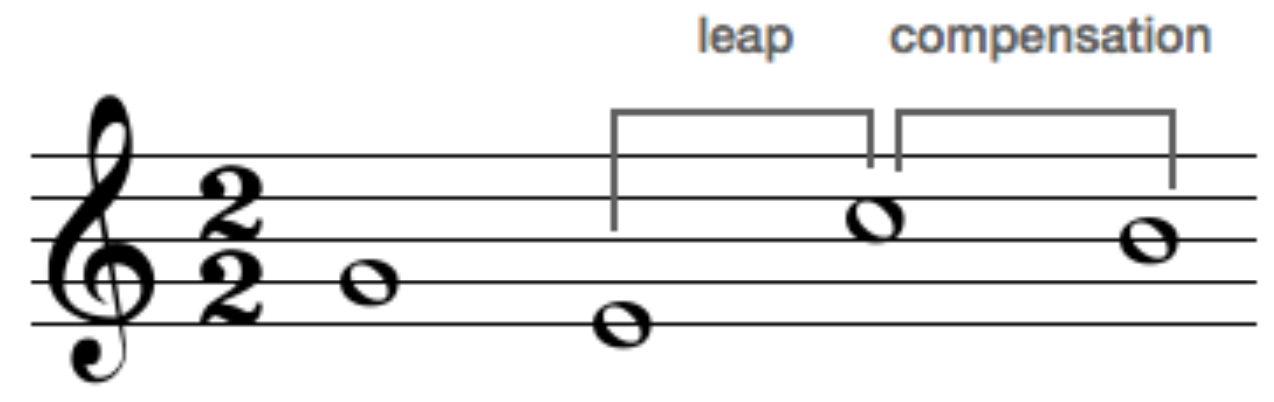
This creates balance and prevents the melody from sounding unstable or directionless. Without compensation, large leaps can feel abrupt or unresolved. Octave leaps should be doubly balanced, with a note that lies within the octave leap preceding it, and the normal falling by a step following it:
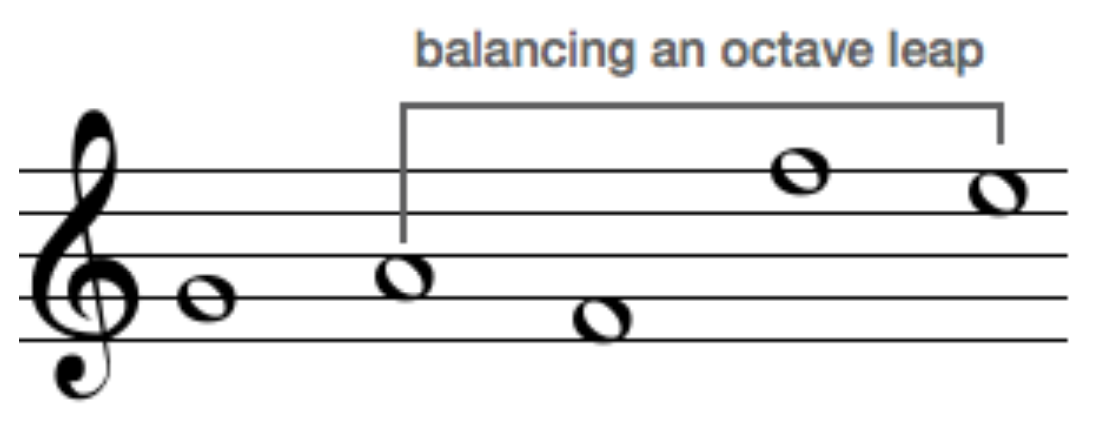
Write a short melody that includes one leap of a sixth or octave. Immediately follow it with stepwise motion in the opposite direction to reinforce balance and musical coherence.
Avoiding Problematic Intervals
Certain intervals, particularly chromatic ones such as augmented and diminished intervals, can create instability if used without control. These include augmented fourths (tritones) and diminished fifths.
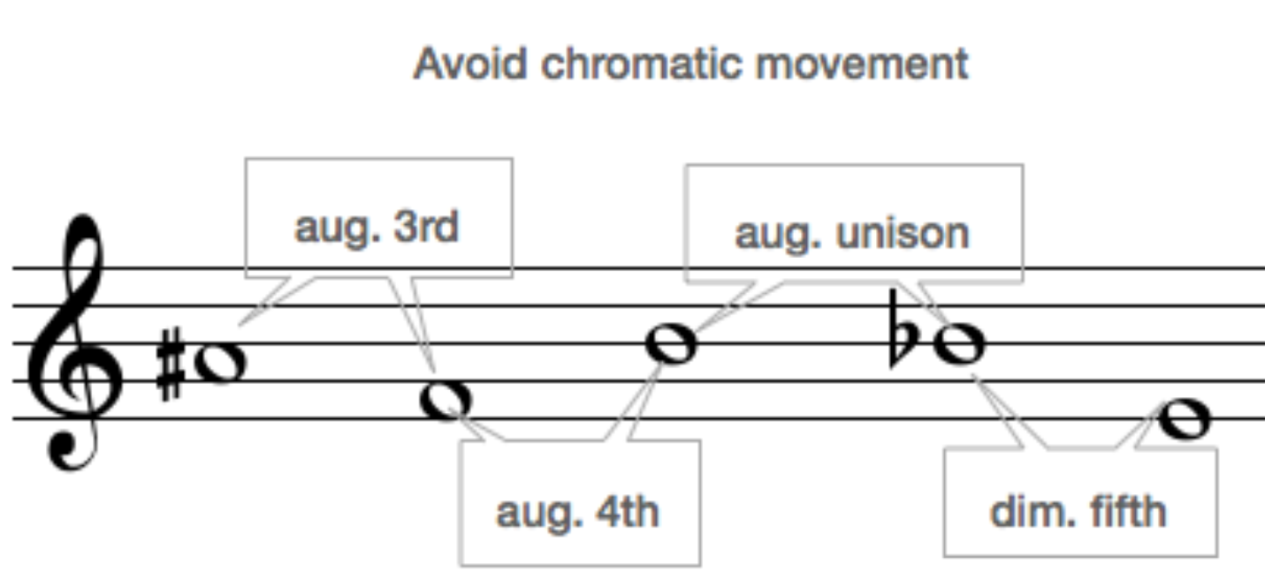
While these intervals are important in harmony, they can sound awkward or unresolved in simple melodic writing. For GCSE and A-Level composition, it is usually best to avoid them until you understand how they function within a tonal context.
Including chromatic intervals without resolving them correctly. This often leads to melodies that sound incomplete or stylistically inconsistent.
Understanding Tendency Tones
Tendency tones are notes that naturally want to resolve to another note. The most important example is the leading note (the seventh degree of the scale), which typically resolves to the tonic. Outlining a tritone (even when no accidental is present) should also be avoided, which usually happens when the seventh degree does not properly resolve (i.e. when the melodic line changes direction at the notes that form it):
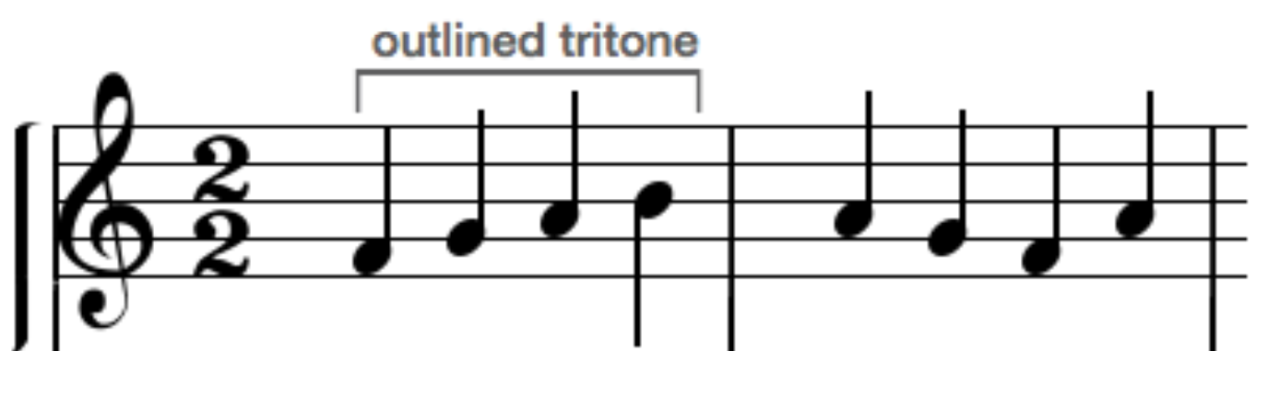
Another common tendency is the fourth degree resolving down to the third. These tendencies are essential for creating a sense of direction and closure in your melody.
Always check your melody for tendency tones. Make sure the leading note resolves upwards to the tonic unless it is part of a clear descending passage.


Melodic Structure Breakdown Example
| Feature | Good Practice | Poor Practice |
|---|---|---|
| Motion | Mostly stepwise (should flow, and not be too narrow) | Constant large leaps |
| Leaps | Balanced and controlled (leaps greater than 5 move stepwise in opposite direction) | Unstructured and excessive |
| Resolution | Tendency tones resolved (7 to 1, 4 to 3) | Unresolved leading notes |
| Intervals | Mostly diatonic (but sharps usually resolve up, flats usually resolve down) | Frequent chromatic intervals |
How To Practise Melodic Motion
Developing strong melodic writing skills requires consistent and focused practice. Rather than trying to write complex melodies immediately, it is far more effective to build your skills gradually through structured exercises.
Step 1: Write a simple stepwise melody using only crotchets and quavers.
Step 2: Add one or two carefully placed leaps.
Step 3: Apply the rule of compensation after each leap.
Step 4: Check and resolve all tendency tones.
Step 5: Refine rhythm and phrasing while keeping clarity.
Key Takeaways
✅ Strong melodies rely primarily on stepwise motion to create shape and coherence.
✅ Leaps should be used sparingly and always balanced with stepwise movement.
✅ The rule of compensation helps maintain melodic stability after large intervals.
✅ Tendency tones must resolve correctly to reinforce tonal direction.
✅ Avoiding excessive chromatic intervals keeps melodies clear and stylistically appropriate.
FAQ
What Is Melodic Motion In Music?
Melodic motion describes how a melody moves between notes, including stepwise movement, leaps, and directional shape. It is a key factor in determining how smooth or expressive a melody sounds.
Why Is Stepwise Motion Important?
Stepwise motion creates smooth, connected melodies that are easy to follow and sing. It forms the foundation of most effective melodic writing.
What Is The Rule Of Compensation?
The rule of compensation states that large leaps should be followed by stepwise movement in the opposite direction to maintain balance and coherence.
What Are Tendency Tones?
Tendency tones are notes that naturally resolve to specific pitches, such as the leading note resolving to the tonic or the fourth resolving to the third.
Should I Avoid Leaps In Melody Writing?
No, leaps are important for adding character. However, they should be used carefully and balanced with stepwise motion to maintain a strong melodic structure.
To take your learning to the next level,
check out some of these amazing Courses & Apps






Categories: : GCSE & A-Level Music
Did this article answer all your questions?
If you have any questions, or you want to learn more,
Click the Picture Below to Join the Community for FREE!