A Beginner’s Guide to Irish Traditional Music: Where to Start and What to Expect
 Declan Plummer
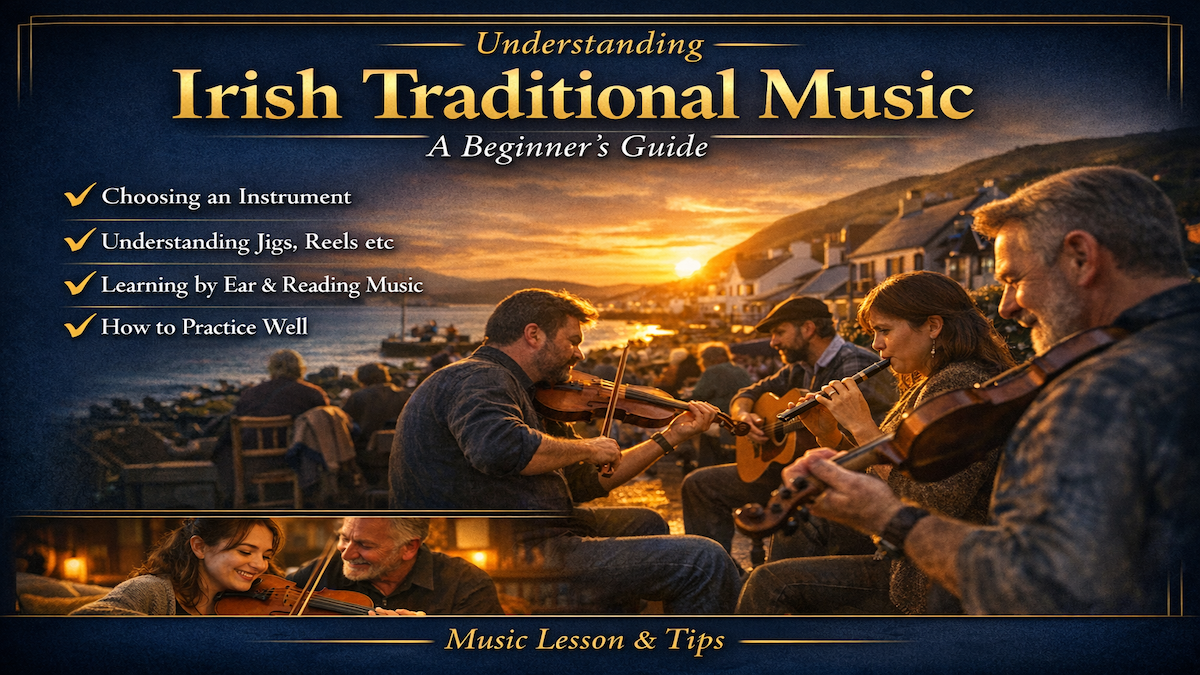
If you’re curious about learning Irish traditional music this guide will give you the perfect starting point.
What Is Irish Traditional Music?
Irish traditional music is a living folk tradition built around shared tunes, strong rhythm, listening skills, and community music-making. For beginners, the best place to start is by choosing one suitable instrument, learning a few simple tune types, listening regularly, and understanding how sessions work.
Irish traditional music, often called Irish trad, has remained vibrant because it is not only something people perform, but something people actively take part in. It is heard in pubs, homes, festivals, teaching centres, and music schools, but its real strength lies in the way it brings players together through a shared repertoire of tunes and a strong oral tradition.
For a beginner, that can feel both exciting and slightly overwhelming. There are many instruments, many tune types, and an entire culture around sessions and shared learning. The good news is that you do not need to know everything at once. A steady start, a clear practice approach, and regular listening will take you much further than trying to rush through too much material too soon.
Trad is especially rewarding because progress quickly begins to connect with real music-making. Even a small number of tunes, learned properly and played with good rhythm, can open the door to joining in, understanding recordings, and gradually becoming part of the wider tradition.
- Irish traditional music is a tune-based folk tradition passed on through listening, imitation, and shared playing.
- Beginners do best when they choose one instrument, learn a few simple tunes, and build strong rhythm first.
- Listening, attending sessions respectfully, and practising little and often are the best foundations for long-term progress.
The Main Building Blocks Of Trad
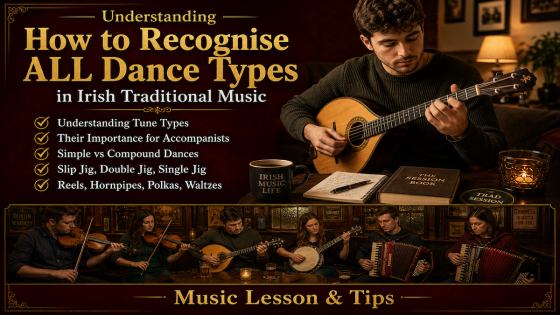
Irish traditional music is shaped by a few core elements. The first is the tune repertoire itself: jigs, reels, hornpipes, polkas, slips jigs, marches, airs, and more. Each type has its own rhythmic feel, and learning to recognise these patterns is one of the most useful early skills a student can develop.
The second element is instrumentation. Instruments such as tin whistle, fiddle, flute, bodhrán, concertina, uilleann pipes, and Irish bouzouki all contribute different colours to the tradition. Some carry melody, some provide rhythm and harmony, and many players eventually become familiar with how these roles interact in a session.
A third essential ingredient is ornamentation. In Irish music, the character of the style comes not only from the notes themselves, but from the way those notes are shaped. Rolls, cuts, taps, slides, bowed lift, rhythmic emphasis, and phrasing all contribute to the sound. Beginners do not need to master ornaments immediately, but they should know that style matters just as much as accuracy.
Finally, there is the social side of the tradition. Sessions are not an optional extra. They are at the heart of how the music lives, grows, and is shared. Even if you are not ready to join in yet, listening to live sessions will teach you phrasing, tempo, tune flow, and repertoire in a way that isolated practice cannot.
Pro Tip: Think of trad as a language. Tunes are your vocabulary, rhythm is your accent, and sessions are where you learn how the language is really spoken.
Choosing Your First Instrument
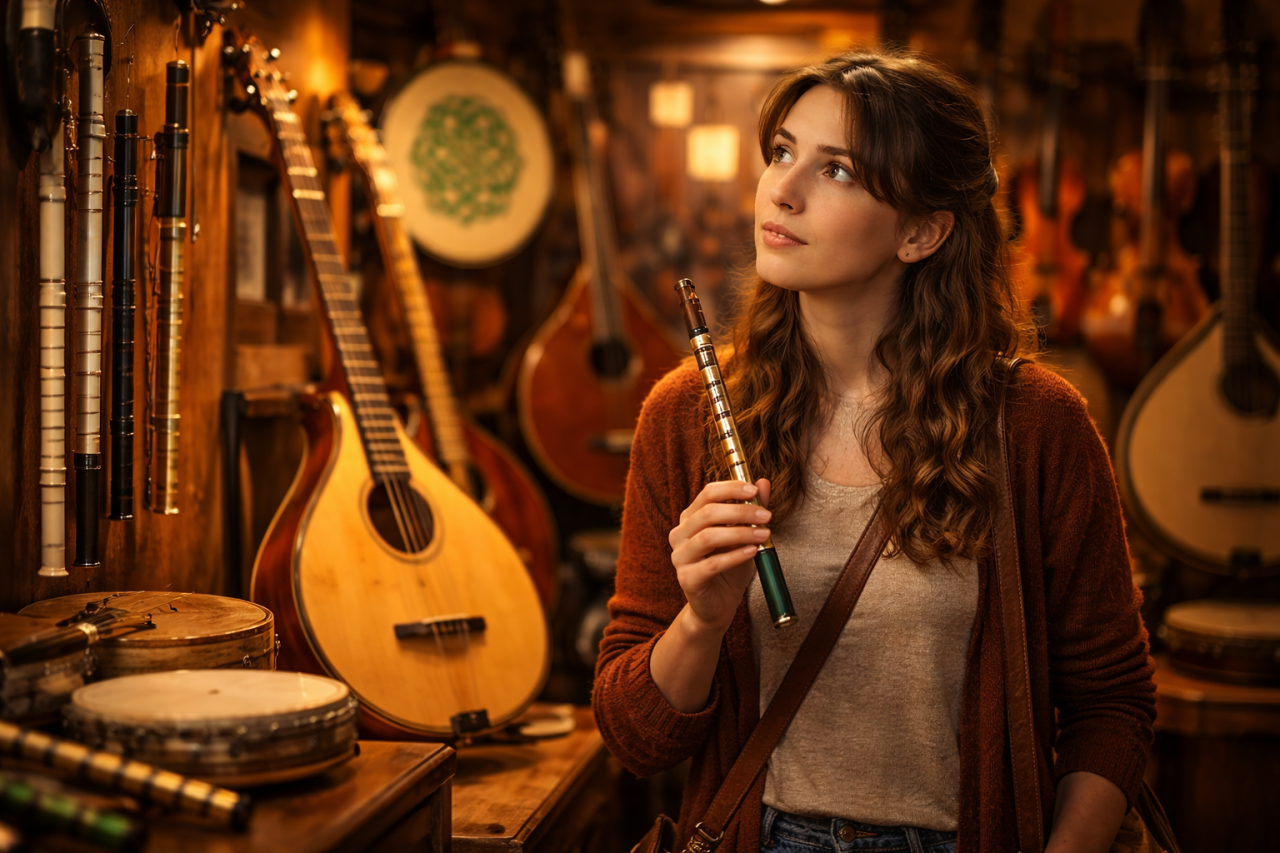
One of the most important beginner decisions is choosing an instrument that suits your interests, budget, and practical circumstances. There is no single correct choice, but some instruments are more approachable than others when you are starting from scratch.
The tin whistle is one of the strongest beginner options. It is affordable, portable, and capable of giving you direct access to melody playing quite quickly. It also teaches breath control, basic finger technique, and phrasing in a very clear way. For many students, it is an ideal first step into the tradition.
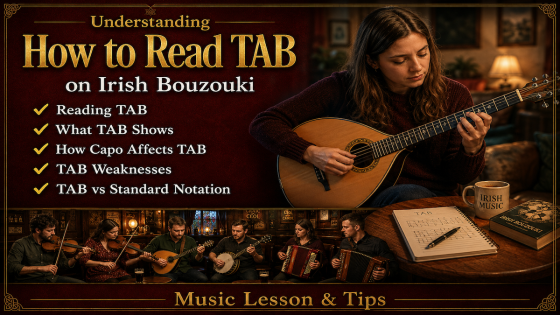
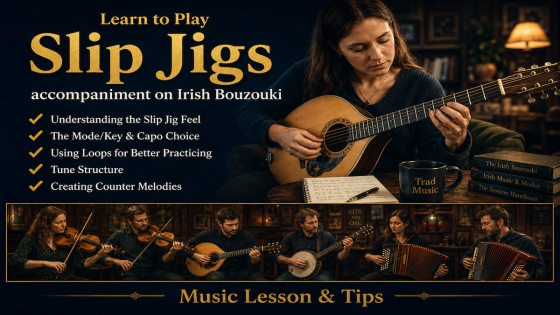
The Irish bouzouki is another excellent starting point, particularly for those who enjoy accompaniment, rhythm, and harmony. It gives students the chance to support tunes in a session context while also developing chord knowledge, pulse, and listening awareness. It is especially appealing to players coming from guitar or other fretted instruments.
The fiddle offers perhaps the most iconic trad sound, but it is physically and technically more demanding in the early stages. Instruments such as flute, concertina, and uilleann pipes are beautiful but can require more investment, setup, and technical control. Bodhrán can be very rewarding for rhythm-focused players, though it still demands sensitive timing and musical awareness.
Practice Box: Before committing to an instrument, listen to recordings of that instrument in real Irish sessions. Ask yourself whether you are drawn more to melody, rhythm, harmony, or accompaniment. That answer often points you in the right direction.
A Simple Beginner Comparison
| Instrument | Best For | Difficulty To Start | Beginner Note |
|---|---|---|---|
| Tin Whistle | Melody playing | Low | Affordable and highly accessible |
| Irish Bouzouki | Rhythm and accompaniment | Low to medium | Excellent for chordal support |
| Fiddle | Melody and ornamentation | High | Very rewarding but slower at first |
| Bodhrán | Rhythm support | Medium | Timing and feel matter enormously |
Understanding Jigs, Reels, Hornpipes, And Polkas
Irish traditional music is tune-based, which means that rhythm and tune type are central. If you can hear the difference between common tune forms, you will learn faster, memorise more securely, and feel much more at home in lessons and sessions.
Jigs are usually in 6/8 and have a bouncing, lilting motion. Reels are in 4/4 and tend to flow in a more driving, even pattern. Hornpipes are also in 4/4, but they usually have a more swung and grounded feel. Polkas are lively, compact tunes with strong forward momentum and are especially associated with certain regional traditions.
A common beginner mistake is to focus only on notes while ignoring the rhythmic identity of the tune. In trad, the feel of the tune is part of the tune. If the pulse is weak or the groove is missing, the music will not sound convincing even if the fingering is technically correct.
Common Mistake Box: Do not learn tunes as a string of equal notes. A jig should feel like a jig, and a reel should feel like a reel. Rhythm is not decoration in trad; it is one of the main foundations of the style.
Tune Types At A Glance
Rhythm Pattern Box
Jig: 6/8 feel with a light, dancing lift.
Reel: 4/4 feel with steady flow and drive.
Hornpipe: 4/4 with more weight and a slightly swung feel.
Polka: lively pulse with short, energetic phrasing.
Learning By Ear And Reading Music
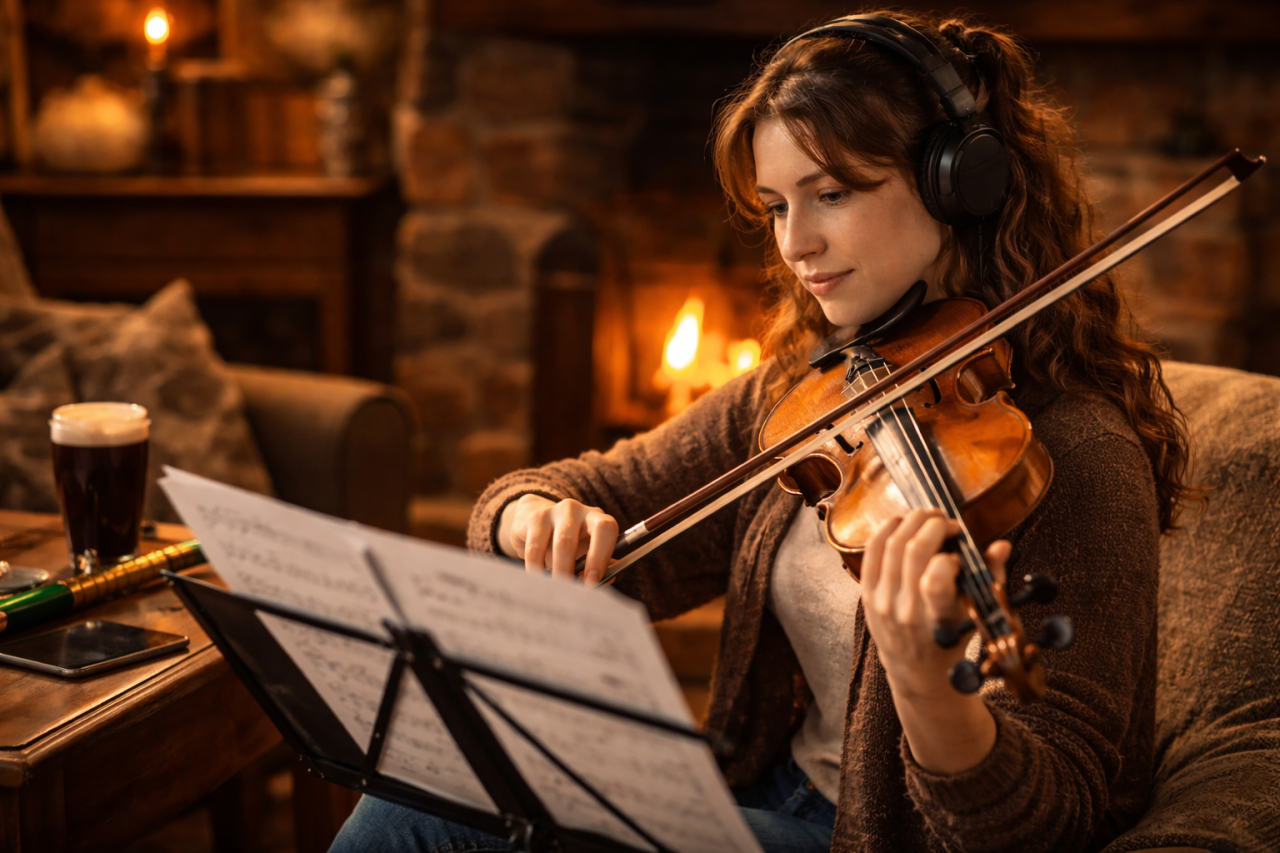
Trad is widely taught by ear, and this is one of the healthiest habits a beginner can develop. Listening closely, repeating short phrases, and gradually memorising tunes helps you absorb phrasing and style more naturally than relying on notation alone.
At the same time, reading music can be very useful. It can speed up learning, support memory, and deepen your understanding of rhythm, structure, and pitch relationships. There is no need to treat ear learning and notation as opposites. In practice, many students benefit from a balanced approach that uses both.
A sensible method is to hear the tune first, sing or tap the rhythm, then use notation as a guide rather than a crutch. This keeps the music sounding alive while still giving you a reliable framework to work from.
Insight / Quote Box: In Irish traditional music, notation can show you the road, but listening teaches you how to travel it musically.
What To Expect At A Session
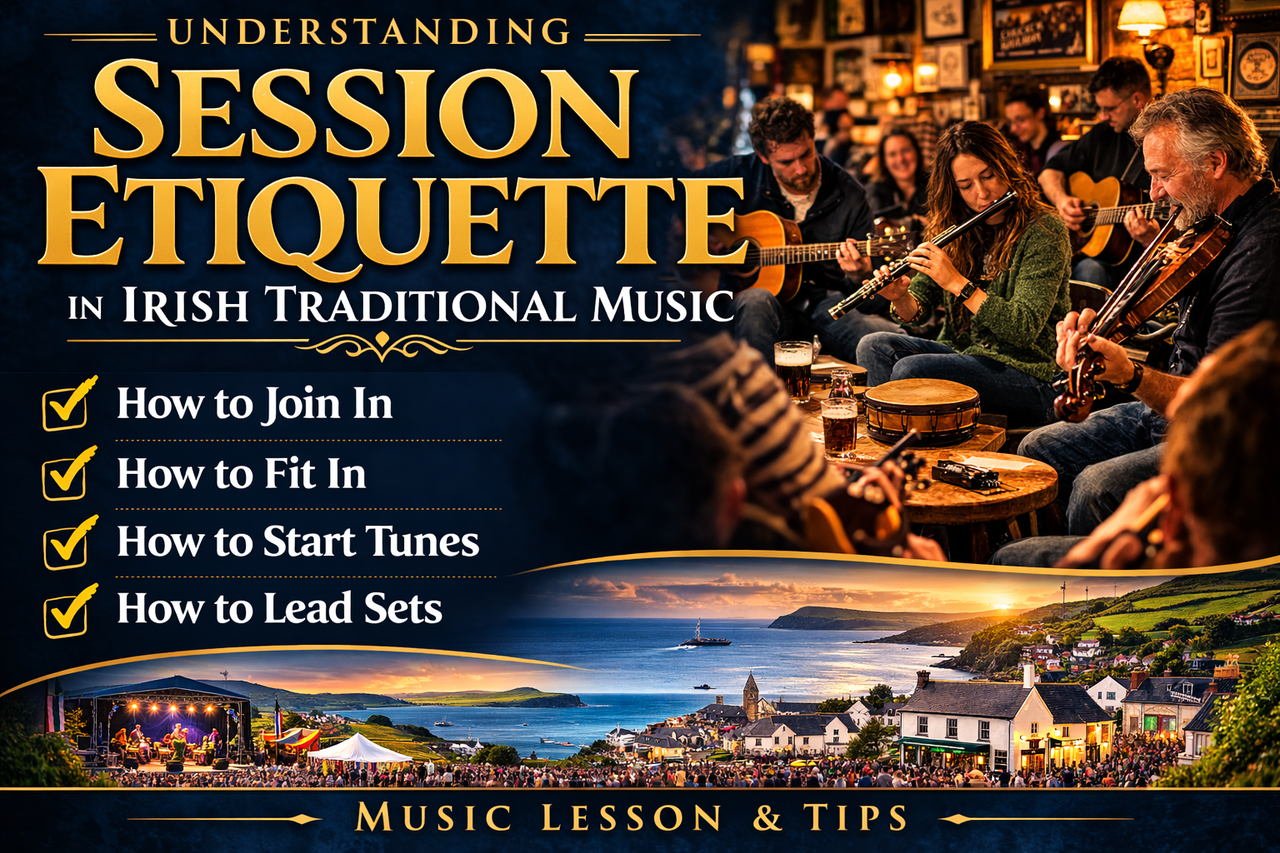
Sessions are informal gatherings where musicians share tunes together, often in pubs or homes. For many beginners, they are both inspiring and intimidating. The key is to understand that a session is not a stage performance. It is a shared musical conversation shaped by listening, respect, and repertoire.
If you are new, begin by attending as a listener. Notice how tunes are grouped, how often they repeat, and how musicians signal transitions. In many sessions, each tune is played several times before the group moves on. This repetition is not boring; it gives the music momentum and allows players to settle into the groove.
You do not need to be an expert to join a session eventually, but you do need enough confidence with a few tunes, enough awareness to follow the group, and enough humility to know when listening is the right contribution.
How To Start Practising Irish Trad Well
Beginners make the fastest progress when practice is simple, regular, and focused. Rather than trying to learn too many tunes at once, choose two or three manageable pieces and work on them thoroughly. Aim to understand their rhythm, shape, and phrasing instead of merely getting through the notes.
Daily listening is equally important. Even five or ten minutes of careful listening to strong traditional players will sharpen your internal sense of style. This supports everything else: timing, ornament awareness, tune memory, and confidence.
It is also helpful to work with a teacher, structured course, or reliable resource. Good guidance can prevent bad habits, make technical issues easier to solve, and help you prioritise the right material at the right stage.
Practice Box: Keep your early practice sessions short and consistent. Fifteen focused minutes each day will usually do more for your progress than one long session at the end of the week.
A Beginner Practice Routine
Start by listening to one tune recording before you play anything. Tap the pulse and identify whether it is a jig, reel, hornpipe, or polka. Then warm up with a few minutes of simple tone, breath, bow, pick, or rhythm work depending on your instrument.
Next, practise one familiar tune slowly and carefully. Work phrase by phrase rather than always starting at the beginning. Once the tune feels stable, repeat it enough times to build rhythm and fluency instead of stopping after a single correct run-through.
After that, spend a few minutes on a newer tune. Keep the goal small: perhaps only the first phrase, or the A part. Finish by playing something enjoyable and familiar so that practice ends with confidence rather than frustration.
Over time, this simple structure builds consistency, strengthens memory, and makes it much easier to prepare for lessons or eventual session participation.
Useful Beginner Resources
If you are ready to take practical first steps, structured beginner resources can make a major difference. A good guide or lesson pack gives you direction, reduces confusion, and helps you focus on the most important habits from the beginning.
For tin whistle learners, a one-month practice guide, daily drills, and help with common mistakes can provide a clear early pathway. For Irish bouzouki learners, guided lesson materials, practice workbooks, and downloadable supporting resources can be especially useful when building accompaniment skills and session awareness.
Whichever instrument you choose, look for resources that encourage steady practice, careful listening, and musical understanding rather than only fast tune accumulation.
Building A Long-Term Relationship With The Tradition
Irish traditional music offers much more than technical development. It gives students access to a musical culture built on sharing, memory, character, and connection. That is why it continues to attract players from many backgrounds and many parts of the world.
As a beginner, your aim is not to know everything immediately. Your aim is to begin well: choose an instrument that genuinely suits you, develop a feel for the main tune types, listen often, and approach sessions with curiosity and respect. Those habits create a strong and lasting foundation.
Key Takeaways
✅ Irish traditional music is best understood as a living, community-based tune tradition rather than only a collection of notes on a page.
✅ Tin whistle and Irish bouzouki are especially strong beginner choices because they offer accessible ways into melody, rhythm, and session music-making.
✅ Learning the feel of jigs, reels, hornpipes, and polkas is just as important as learning correct notes and fingerings.
✅ Ear learning is central to trad, but reading music can still be extremely valuable when used to support listening rather than replace it.
✅ The best beginner progress comes from listening often, practising little and often, and gradually becoming familiar with session culture.
FAQ
What Is The Best Instrument For A Beginner In Irish Trad?
Tin whistle is one of the best beginner instruments because it is affordable, portable, and quick to start on. Irish bouzouki is also an excellent option, especially for students interested in rhythm and accompaniment.
Do I Need To Read Music To Learn Irish Traditional Music?
No, but it can help. Many trad musicians learn mainly by ear, and that remains a central part of the tradition. Reading music is still a useful skill because it can speed up learning and improve your understanding of rhythm and structure.
How Many Tunes Should I Learn At The Start?
Start with two or three simple tunes and learn them properly. It is better to play a small number of tunes with steady rhythm, good memory, and musical confidence than to collect many tunes in a rushed and uncertain way.
Should I Go To A Session Before I Am Ready To Play?
Yes. Listening at sessions is one of the best ways to understand the tradition. You will hear rhythm, tune flow, repetition, and etiquette in a real setting, which is extremely valuable even before you begin joining in.
How Often Should A Beginner Practise?
Short, regular practice is usually best. Even fifteen to twenty minutes a day, combined with frequent listening, can produce strong progress when it is focused and consistent.
🎁 Free Beginner Resource
Ready to take your first steps? I’ve created two FREE RESOURCES for you! One for Tin Whistle, and another for Irish Bouzouki:

FREE TIN WHISTLE RESOURCES:
🎁 FREE: Tin Whistle One-Month PRACTICE GUIDE!
🎁 FREE: TOP 5 PRACTICING TIPS for the Tin Whistle
🎁 FREE: 5-minute DAILY DRILLS for practicing
🎁 FREE: access to the Irish Music COMMUNITY on this site
🎁 FREE: access to FUTURE FREEBIES
🎁 FREE: PRACTICE WORKBOOK (in various formats & sizes
🎁 FREE: PDF on HOW TO FIX TOP 10 LEARNING MISTAKES
Download here 👉 https://www.topscoremusicacademy.com/f/tin-whistle-course-sign-up
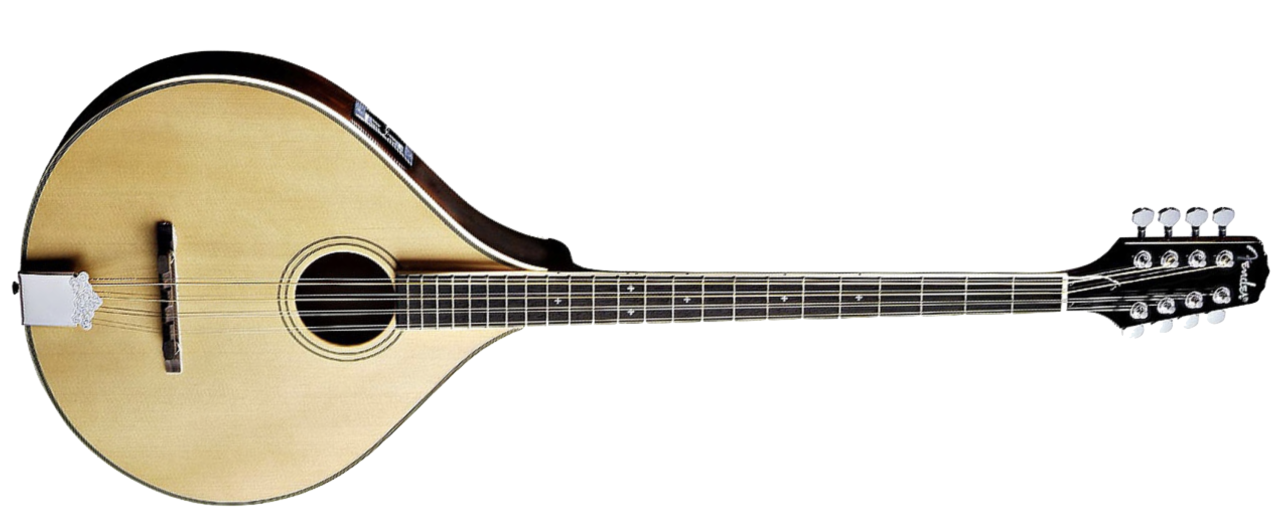
FREE IRISH BOUZOUKI RESOURCES:
🎁 FREE: Irish Bouzouki One-Month PRACTICE GUIDE!
🎁 FREE: access to the Irish Music COMMUNITY on this site
🎁 FREE: access to FUTURE FREEBIES
🎁 FREE: VIDEO LESSON from lesson 11 of the Full Course
🎁 FREE: DOWNLOADS of all Lesson 11 handouts and audio files
🎁 FREE: PRACTICE WORKBOOK in various formats
🎁 FREE: PDF on HOW TO FIX TOP 10 MISTAKES
Download here 👉 https://www.topscoremusicacademy.com/f/learn-the-irish-bouzouki-free-lesson-pack
Categories: : Irish Traditional Music
Did this article answer all your questions?
If you have any questions, or you want to learn more,
Click the Picture Below to Join the Community for FREE!