Borrowed Chords and Altered Chords Explained for Music Theory Students
 Declan Plummer
Learn borrowed chords and altered chords in music theory with clear examples, harmonic functions, and practical ways to hear and use them.
What Are Borrowed Chords And Altered Chords?
Borrowed chords and altered chords are chromatic harmony techniques that add colour beyond ordinary diatonic writing. Borrowed chords usually come from the parallel minor and keep the same harmonic function, while altered chords change one note of a familiar chord to intensify tension, drama, and expressive movement.
Once you understand ordinary diatonic harmony, these two ideas are a natural next step. They allow you to stay in the same key while introducing fresh notes that do not belong to that key’s basic scale. That is why they sound richer, darker, more dramatic, or more emotionally complex than plain major-key harmony.
In practice, these chords appear across classical, pop, theatre, church music, and film-style writing. They are not rare specialist effects. They are standard tools used by composers and songwriters to create stronger cadences, more interesting progressions, and sudden changes of mood without fully modulating to a new key.
This lesson focuses on the most practical forms: borrowed chords taken from the parallel minor, especially ii˚, iv, and bVI, and altered primary chords, especially I+ and V+, where the fifth of the chord is raised to create an augmented triad.
- Borrowed chords usually come from the parallel minor and are most common on ii, iv, and VI in a major key.
- These chords keep a similar harmonic function, especially as predominants leading toward chord V.
- Altered chords often raise one note, especially the fifth, to create stronger tension and expressive upward pull.
Why Chromatic Harmony Matters
Chromatic harmony begins when a chord contains at least one note from outside the key. That does not automatically mean the music has modulated. Very often, the tonic is still secure, but the harmony has become more colourful. Borrowed chords and altered chords sit exactly in that space: the home key still feels stable, yet the sound world becomes wider and more expressive.
This is why these chords are so useful for students. They help bridge the gap between simple harmonic progressions and more advanced chromatic writing. If you can hear how a borrowed iv or an altered V+ behaves, then other topics such as Neapolitan chords, diminished sevenths, and augmented sixth chords become much easier to follow.
Pro Tip: When analysing chromatic harmony, ask two questions first: “What key are we still in?” and “Which note has changed?”. That prevents you from mistaking a colourful borrowed chord for a full modulation, which usually involves repeated occurrences of the same chromatic note.
What A Borrowed Chord Is
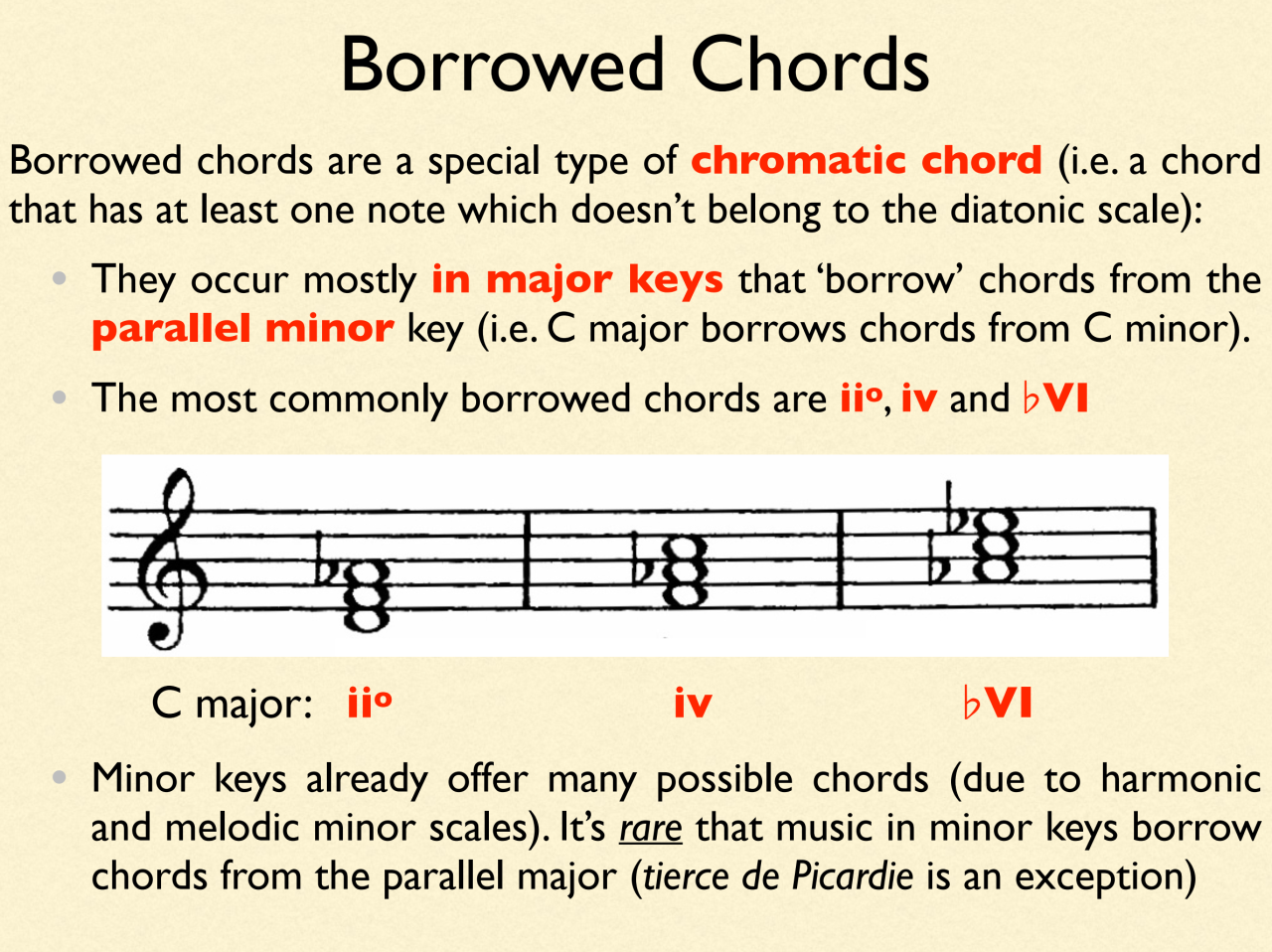
A borrowed chord is a chord taken from the parallel key. In a major key, that normally means borrowing from the parallel minor. For example, in C major, the parallel minor is C minor. Both keys share the same tonic, so the music does not feel as though it has completely left home. Instead, the harmony briefly borrows the darker colour of the minor mode.
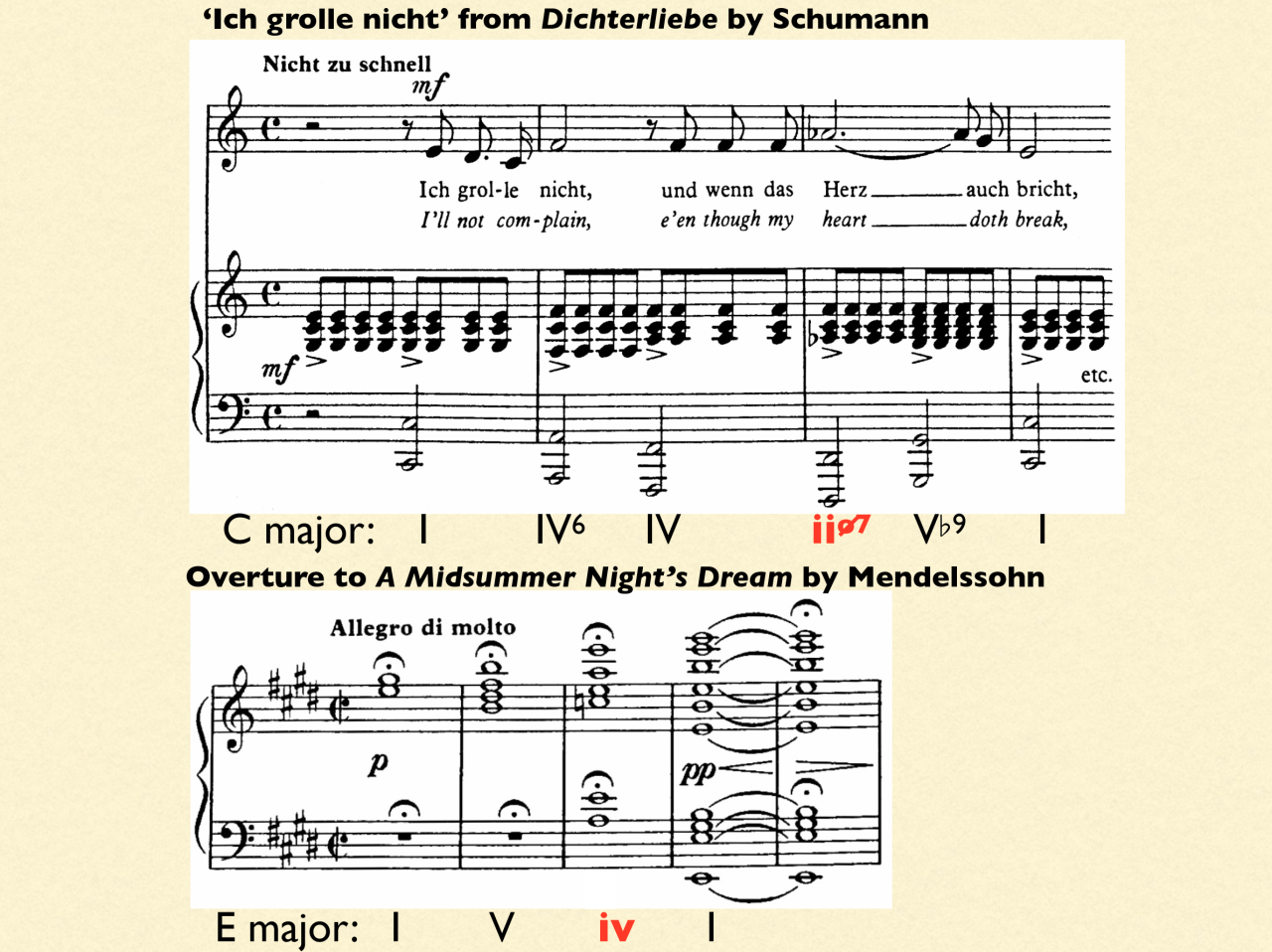
The most common borrowed chords in a major key are ii˚, iv, and bVI from the parallel minor. Even though their notes change, their overall role in the progression often remains similar. They still tend to move toward dominant harmony and then resolve back to tonic.
Insight: Borrowed chords are powerful because they change colour without destroying tonal focus. The tonic remains clear, but the emotional atmosphere deepens immediately.
The Three Most Common Borrowed Chords
The most useful borrowed chords to learn first are ii, iv, and VI in major keys. These appear frequently because they fit naturally into standard harmonic flow. Rather than sounding random, they usually behave as predominants, meaning that they prepare chord V and strengthen the return to chord I.
Chord Progression Box: In C major, compare these progressions:
Diatonic: ii – V – I = Dm – G – C
Borrowed: ii° – V – I = D diminished – G – C
Borrowed: iv – V – I = Fm – G – C
Borrowed: bVI – iv – V – I = Ab – Fm – G – C
The borrowed ii in a minor key is diminished, so in a major-key setting it gives a more fragile and unsettled sound than the normal minor supertonic. The borrowed iv is especially famous because it adds immediate melancholy. Many listeners notice its effect even if they do not know the theory behind it.
The borrowed flat VI is also extremely useful. It can move to iv or IV, to ii or ii˚, or directly toward dominant harmony V. Because of that, it fits naturally into familiar descending progressions such as 6–4–2–5–1 or shortened versions of the same pattern.
| Borrowed Chord | In C Major | Typical Function | Effect |
|---|---|---|---|
| ii° | D–F–Ab | Predominant | Unstable, tense, expressive |
| iv | F–Ab–C | Predominant or direct to I | Melancholic, warm, nostalgic |
| bVI | Ab–C–Eb | Predominant link | Broad, dramatic, rich |
Borrowed Chords In Real Music
One of the clearest pop examples of borrowed harmony is the minor iv in a major key. This chord often creates a poignant shift in mood because it introduces the lowered sixth degree. That single note can transform a bright major progression into something reflective and emotionally complex.
The lesson also points toward the use of bVII moving to IV, a progression heard frequently in pop and rock. This is different from the normal leading-note chord vii°, which naturally rises to tonic. When the seventh degree is flattened, it becomes a major subtonic chord instead, and its behaviour changes. Rather than pushing strongly to I, it often moves to IV with a broad, anthem-like quality.
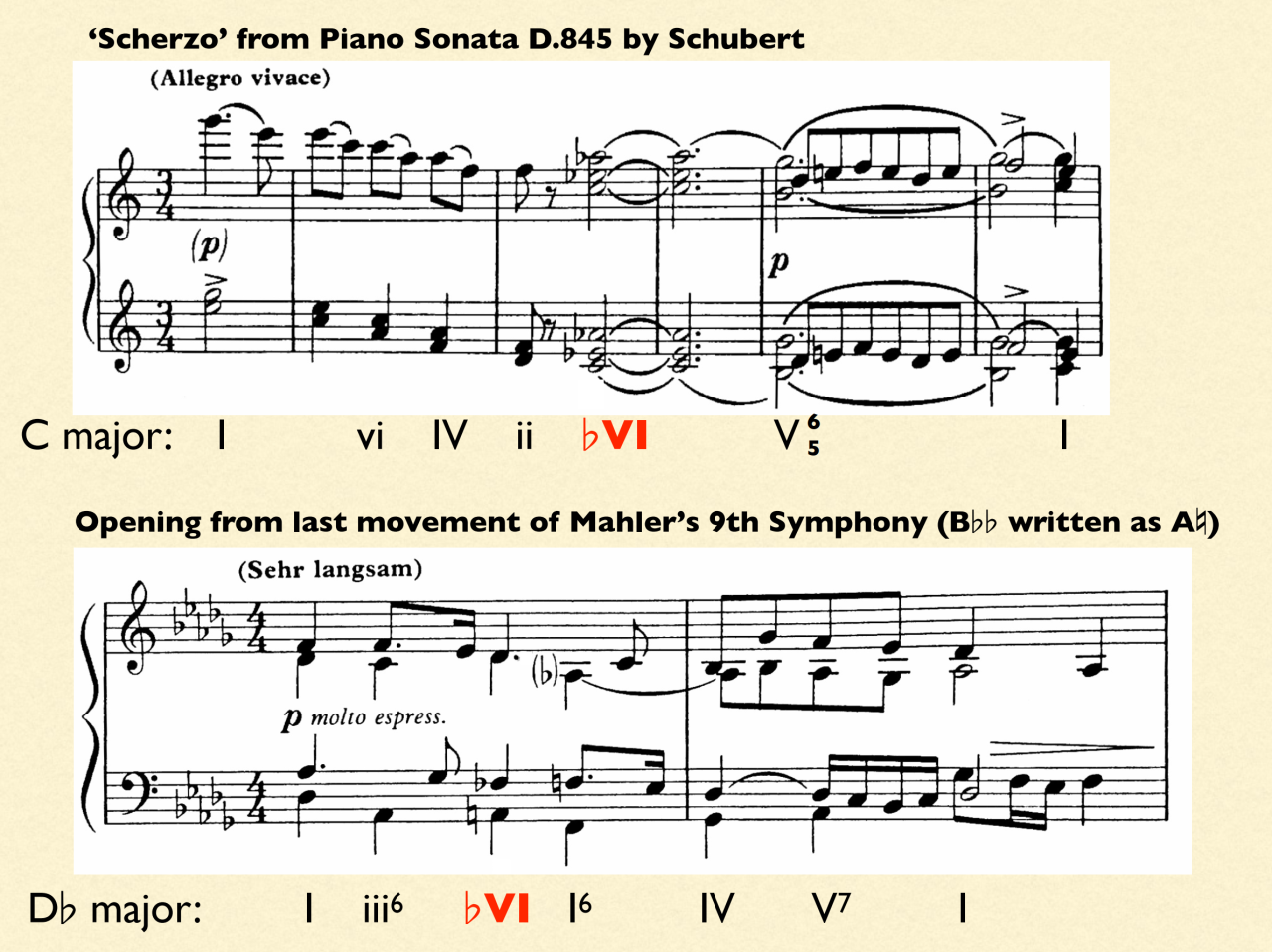
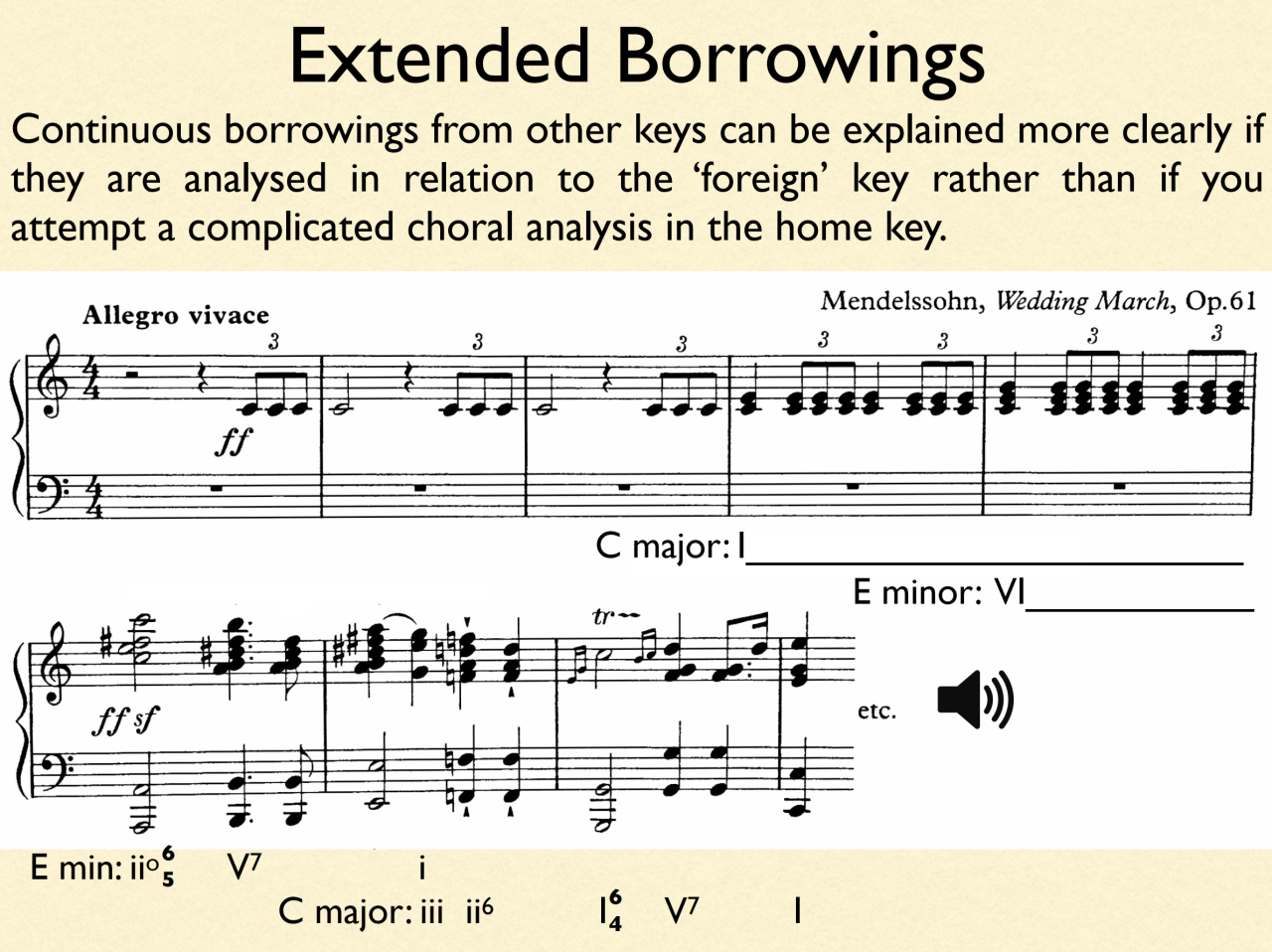
Borrowed chords are equally important in classical music. The lesson highlights examples from Schumann, Mendelssohn, Schubert, Mahler, and church music from the Baroque period. The point is not simply to label isolated chords, but to hear how composers use chromatic colour to intensify words, shape atmosphere, or momentarily darken the harmony without fully leaving the home key.
Common Mistake: Do not assume every accidental means modulation. A single borrowed chord often creates local colour only. The key may still be completely stable.
Borrowed Chords In Minor Keys
Borrowed chords are more commonly discussed in major keys, because minor keys already contain more flexible harmonic possibilities through natural, harmonic, and melodic minor forms. However, one especially famous example in minor is the Tierce de Picardie, or Picardy third.
This happens when a piece in a minor key ends with a major tonic chord instead of a minor one. The final third is raised, creating a brighter ending. In sacred Baroque music, this effect often gave a sense of release, light, or spiritual resolution after a serious or sombre movement.
Practice Box: Play a short phrase in C minor and end it twice: first with C minor, then with C major. Listen carefully to how the emotional meaning changes even though the tonic note stays the same.
What An Altered Chord Is
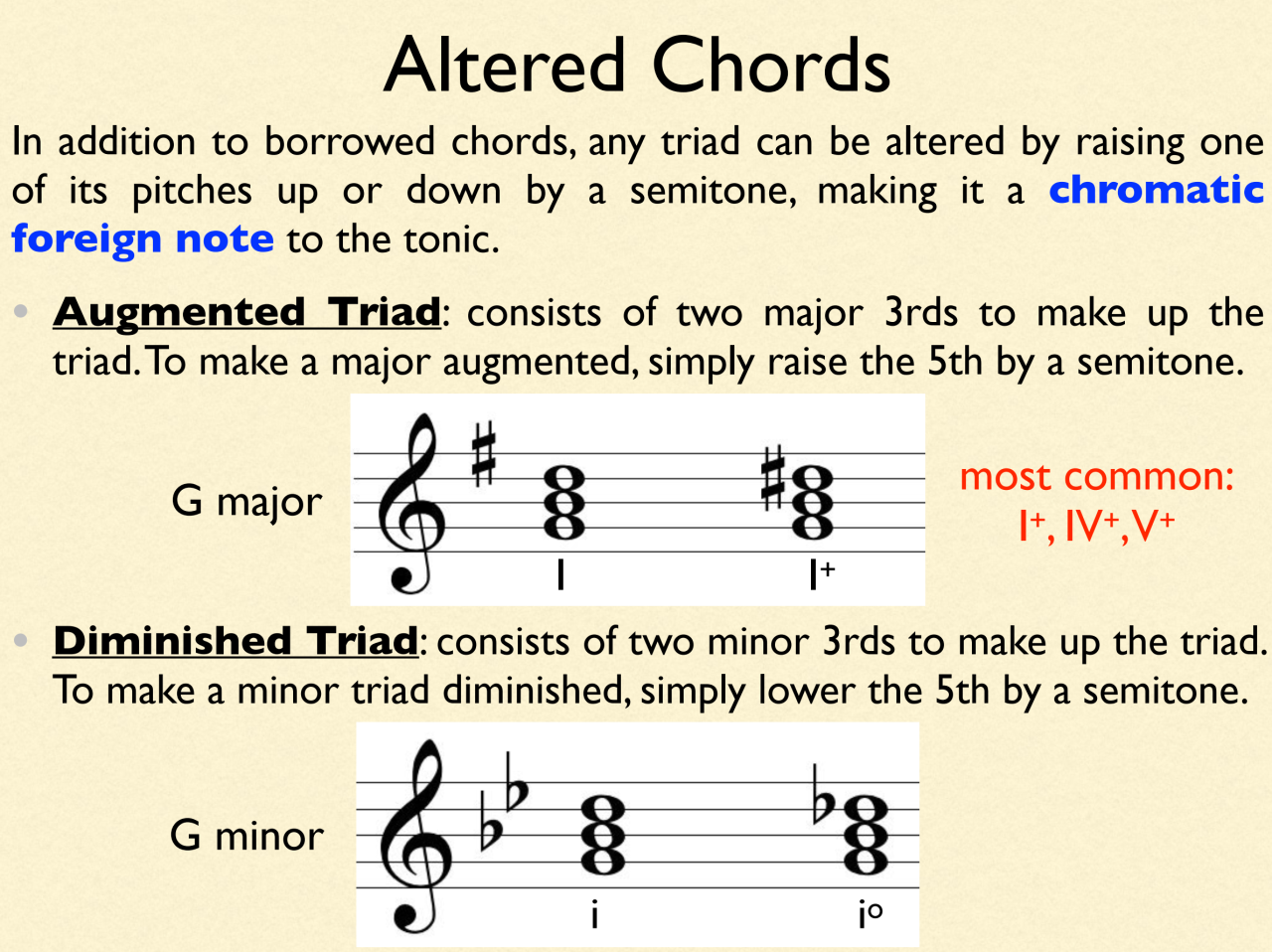
An altered chord is slightly different from a borrowed chord. Instead of taking a chord from the parallel key, you change one note of a familiar chord to create a new sonority. In this lesson, the main examples are augmented triads formed by raising the fifth of a primary chord.
The most common places for this are chords I, IV, and V. These are primary chords, so any alteration to them has a strong effect. Raising the fifth gives the chord an augmented interval, and that sharpened note usually wants to continue upward by semitone. That is why altered augmented chords feel so directional and dramatic.
The altered tonic chord is especially effective in theatrical or lyrical music because it sounds warm, searching, and emotionally heightened. The altered dominant is also important because it increases the pull back toward tonic by creating yet another note that wants to rise.
Quote Insight: When a raised note is added to an augmented chord, the harmony often feels as though it is leaning forward. That sense of lift is one of the clearest clues that an altered chord is present.
Borrowed Chords And Altered Chords Compared
Both borrowed chords and altered chords create chromatic colour by changing at least one note of a diatonic harmony. The difference lies in where the new sonority comes from. If the chord can be understood as coming from the parallel key, it is usually called borrowed. If the chord is simply reshaped into something new, especially through augmentation of the 5th, it is better understood as altered.
This distinction matters in analysis because it helps you explain not only what the chord is, but why it sounds the way it does. Borrowed chords tend to import modal colour from the minor system, while altered chords tend to intensify motion and increase expressive tension within the current key.
Common Mistake: Students often label every unusual major or minor chord as “borrowed.” Check first whether the chord genuinely exists in the parallel key.
How To Practise Hearing These Chords
The best way to learn this topic is to compare diatonic and chromatic versions of the same progression. Start with simple material in one key, preferably C major, so that the altered notes are easy to see. Play ii–V–I, then change ii into diminished ii˚. Play IV–V–I, then change IV into minor iv. Play V–I, then sharpen the fifth of V and hear how much stronger the resolution becomes.
Next, listen for emotional effect rather than just note names. Borrowed iv often sounds nostalgic or melancholic. Flat VI often sounds broad and dramatic. An augmented dominant often sounds urgent and yearning, pulling the ear even more to chord I (the leading note and the raised 5th desperately want to rise by a semitone to two notes that belong to chord I). These descriptive reactions matter because they help connect theory to musical hearing rather than turning harmony into a purely written exercise.
Pro Tip: Practise these chords in songs you already know. A familiar melody makes it much easier to notice what the chromatic harmony is contributing.
Practice Routine
Start in C major and play the seven ordinary diatonic triads so that the home key is firmly in your ear. Then isolate the three most common borrowed chords from C minor: diminished ii, minor iv, and flat VI. Play each one slowly and compare it directly with the normal diatonic version.
Next, practise short progressions. Use ii˚–V–I, iv–V–I, and bVI–iv–V–I. Repeat each progression several times until you can hear the borrowed chord as a function, not just as a strange collection of notes.
After that, move to altered chords. Play I and V in several keys, then raise the fifth to form augmented versions. Always resolve them carefully so that you hear the upward pull of the altered note.
Finally, take a short piece, song, or chord sequence you already know and experiment by replacing ordinary ii, IV, or VI with borrowed versions, or by intensifying I or V through alteration. This is the stage where the theory becomes usable musicianship.
Key Takeaways
✅ Borrowed chords usually come from the parallel minor and are most often found on ii˚, iv, and VI in a major key.
✅ These chords usually keep their harmonic role, especially as predominants leading toward chord V.
✅ The borrowed iv and flat VI are especially useful for creating darker colour and emotional contrast without full modulation.
✅ Altered chords are created by changing a note of a familiar chord, often by raising the fifth to make an augmented triad (I+ and V+ especially).
✅ The most effective way to learn this topic is to hear each chromatic chord beside its ordinary diatonic version.
FAQ
What Is The Difference Between A Borrowed Chord And A Modulation?
A borrowed chord adds colour from the parallel key while the original tonic still feels stable. A modulation establishes a new key as the harmonic centre. One borrowed chord does not usually create that full sense of tonal change.
Which Borrowed Chord Should I Learn First?
The minor iv is often the best first example because it is easy to hear and appears in many styles. After that, learn ii˚ and bVI, since all three are common and closely connected in harmonic function.
Why Do Altered Augmented Chords Sound So Strong?
They sound strong because the raised note usually wants to continue upward by semitone. That creates extra tension and gives the chord a clear sense of direction, especially when it resolves into a stable harmony.
Can Borrowed Chords Be Used In Pop Music?
Yes. Borrowed chords are extremely common in pop and rock. Minor iv and bVII are particularly well known because they create memorable emotional contrast while keeping the progression easy to follow.
How Do I Get Better At Spotting These Chords In Analysis?
First identify the key, then compare the notes of the unusual chord with the normal diatonic version. If it matches a chord from the parallel minor, it is likely borrowed. If it is a reshaped version of a primary chord, it is likely altered.
To take your learning to the next level,
check out some of these amazing Courses & Apps

Categories: : Music Theory
Did this article answer all your questions?
If you have any questions, or you want to learn more,
Click the Picture Below to Join the Community for FREE!