Grade 5 Music Theory Made Easy: Master Time Signatures, Grouping & Simple vs Compound Time
 Declan Plummer
Learn time signatures, note grouping, and how to convert simple to compound time for Grade 5 music theory success.
Understanding Time Signatures, Grouping,
And Simple To Compound Time
This lesson explains how to identify time signatures by counting note values, recognising grouping patterns, and understanding the difference between simple, compound, and irregular time. It also shows how to rewrite a bar from simple time into compound time using clear rules that students can apply in Grade 5 theory questions.
One of the biggest difficulties in music theory is that a bar can look more complicated than it really is. Notes with dots, rests, beams, and unusual groupings often make students think a question is harder than it is. In reality, most of these exercises become much easier once you know what value you are counting and how the notes are grouped together.
In this lesson, the main focus is on two common Grade 5 theory skills: choosing the correct time signature for a bar, and rewriting a bar from simple time into compound time. Both tasks depend on careful counting, but they also depend on understanding beat structure rather than simply adding notes mechanically.
A good student does not just count randomly from left to right. Instead, they first decide what kind of note value matters in the bar, then look at how the music is beamed and grouped. That approach saves time, reduces mistakes, and makes awkward-looking examples much more manageable.
- Work out what the time signature means before you start counting notes.
- Look at note grouping and beaming, because it often reveals the beat pattern.
- When rewriting simple time into compound time, add dots, remove triplets, and add duplets where needed.
How To Read A Time Signature Properly
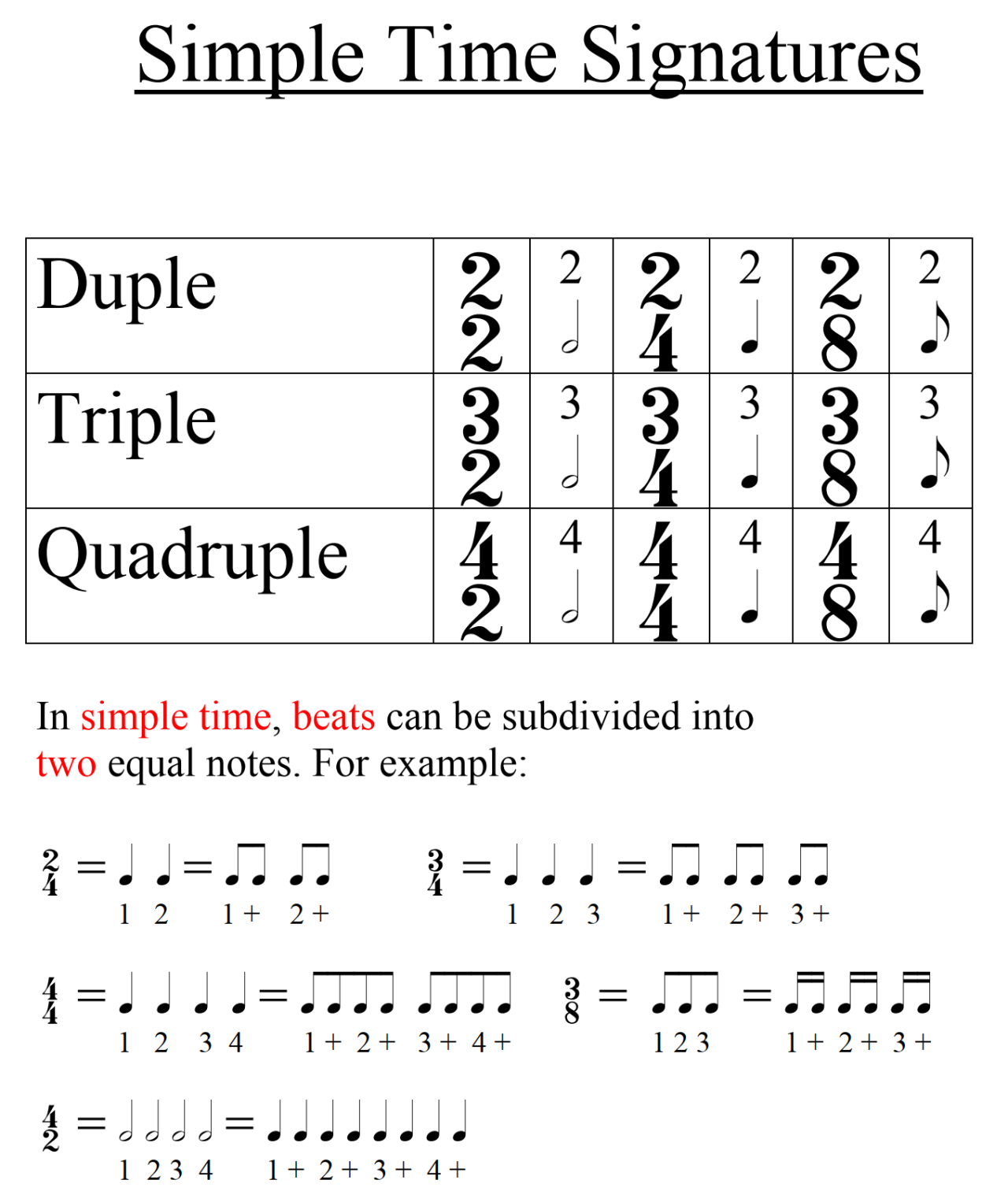
Before answering any time signature question, you must understand what the numbers mean. The top number tells you how many note values are grouped into the bar, and the bottom number tells you which note value is being counted. For example, 3/8 means three quavers (eighth notes) in the bar, while 3/4 means three crotchets (quarter notes) in the bar.
This sounds straightforward, but students often become confused when they move from simple time to compound time. In simple time, the beat divides naturally into two equal parts. In compound time, the beat divides naturally into three equal parts. That difference affects both how the music feels and how the notes are grouped on the page.
Pro Tip: Always say the time signature out loud in full before counting. For example, say “five quavers in the bar” or “twelve semiquavers in the bar.” You could take this further and try matching the syllables in a phrase to a time signature and repeating them over and over: example BMW = 5 beats, City University = 7 beats! This helps you focus on the correct note value immediately.
Simple, Compound, And Irregular Time
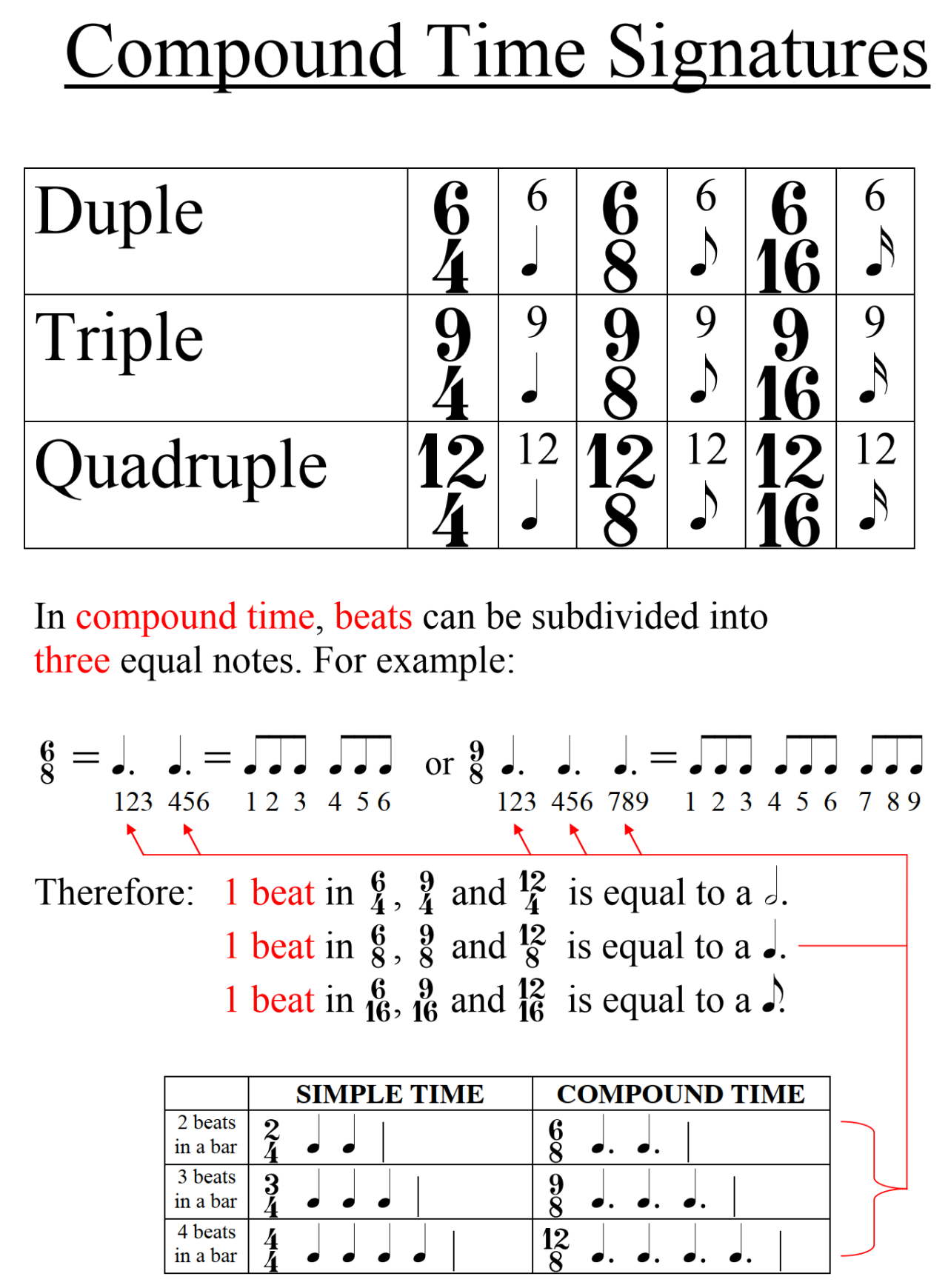
A reliable shortcut is to recognise the most common categories quickly. Time signatures with 2, 3, or 4 at the top are normally simple time. Time signatures with 6, 9, or 12 at the top are compound time. Time signatures such as 5 or 7 are irregular, because they do not divide into one neat repeated pattern in the same way. In fact, irregular time signatures can be thought of as combinations of 2 (simple) and 3 (compound time). So 5/4 can be 2 beats followed by 3 beats or vice versa; and 7/4 can be thought of as 4 beats (2+2) followed by 3 beats or vice versa.
It is vital to remember that 6/8 does not mean six separate beats. It just means six quavers grouped as two beats, with each (dotted crotchet) beat dividing into three quavers. Likewise, 9/8 means nine quavers grouped as three beats, and 12/16 means twelve semiquavers grouped as four dotted-quaver beats. That is why compound time can look busier on the page while still having a clear pulse.
Insight: Compound time is not harder because it has bigger numbers. It is simply organised differently. Once you understand that the beat divides into three, many confusing bars become much easier to read.
How To Work Out The Correct Time Signature
When a question asks you to choose the correct time signature, there are two main strategies. First, find the most sensible note value to count. Second, study the way the notes are grouped. Strong students use both methods together rather than relying on arithmetic alone.
The first method is to find a common unit. If the choices are in quavers and crotchets, decide which of those note values makes the most musical sense for the bar. Count carefully and check whether the total matches one of the options. This is especially useful when the notes contain dots or very short note values.
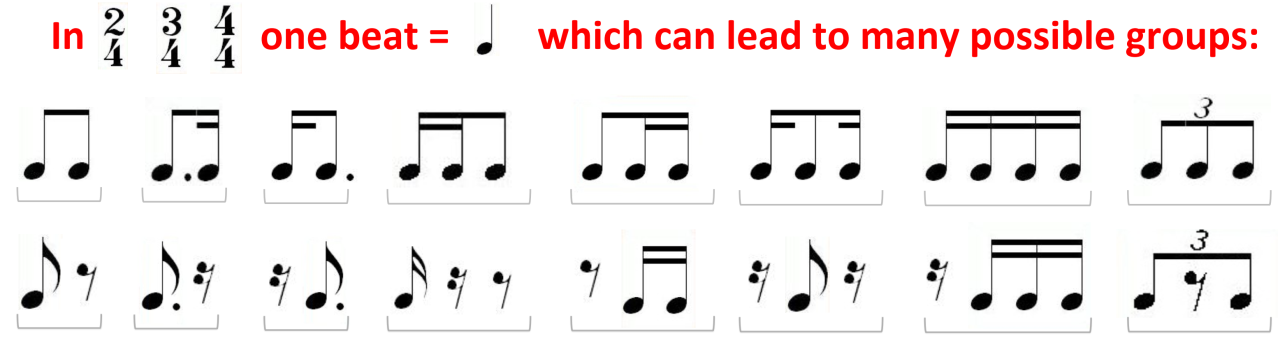
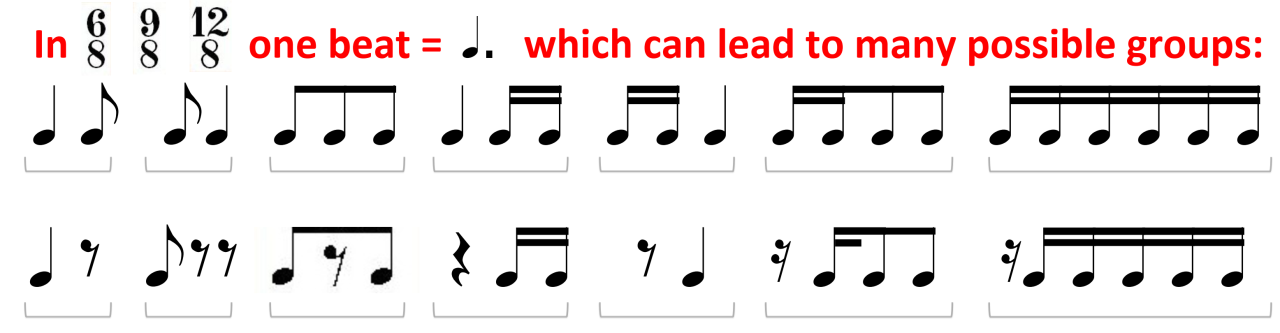
The second method is to look at the beaming. Grouped notes often reveal the beat structure. If four semiquavers are beamed together, that may suggest one crotchet beat. If three quavers or three semiquavers are grouped in a regular way, that strongly suggests compound time. Beaming is not decoration. It is a clue.
Practice Box: When you feel stuck, do not try to count everything at once. Circle one small group, convert it into a larger note value, then move to the next group. Build the bar step by step.
Using Grouping To Save Time
Suppose you see four semiquavers together. Rather than counting each semiquaver individually, recognise that the group equals one crotchet. If the next symbol is another crotchet, and then a dotted quaver plus semiquaver, that also equals one crotchet. Very quickly, the bar may reveal itself as 5/4 without any complicated calculation.
This is a far better method than counting every tiny value from scratch. In an exam, speed matters. If you can spot complete beat groups, you are reading music intelligently rather than just adding fractions.
Common Mistake: Students sometimes choose a time signature that adds up mathematically but ignores the grouping. In theory exams, the notation must make musical sense as well as numerical sense. Always check the beaming before deciding.
Understanding Dotted And Double-Dotted Notes
Dotted notes often cause panic, but the rule is consistent. One dot adds half the value of the original note. A dotted crotchet equals a crotchet plus a quaver. A dotted quaver equals a quaver plus a semiquaver.
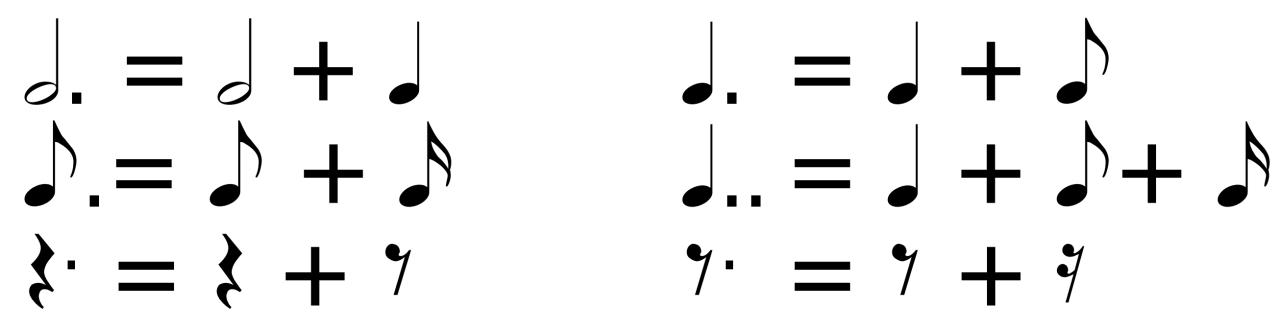
A second dot adds half the value of the first dot. That means a double-dotted note grows in two stages. For example, a double-dotted quaver equals a quaver plus a semiquaver plus a demisemiquaver. Although this looks awkward, the logic is always the same: each new dot adds half of what came immediately before.
Once you understand this pattern, even unusual bars become less intimidating. Instead of reacting to the visual complexity, you simply translate the note into smaller values and rebuild it into the beat unit you need.
Simple To Compound Time: The Rule Students Need To Remember
Another important part of the lesson is rewriting a bar from simple time into compound time. This is a very common theory task, and it becomes much easier when you know the standard conversion rules.
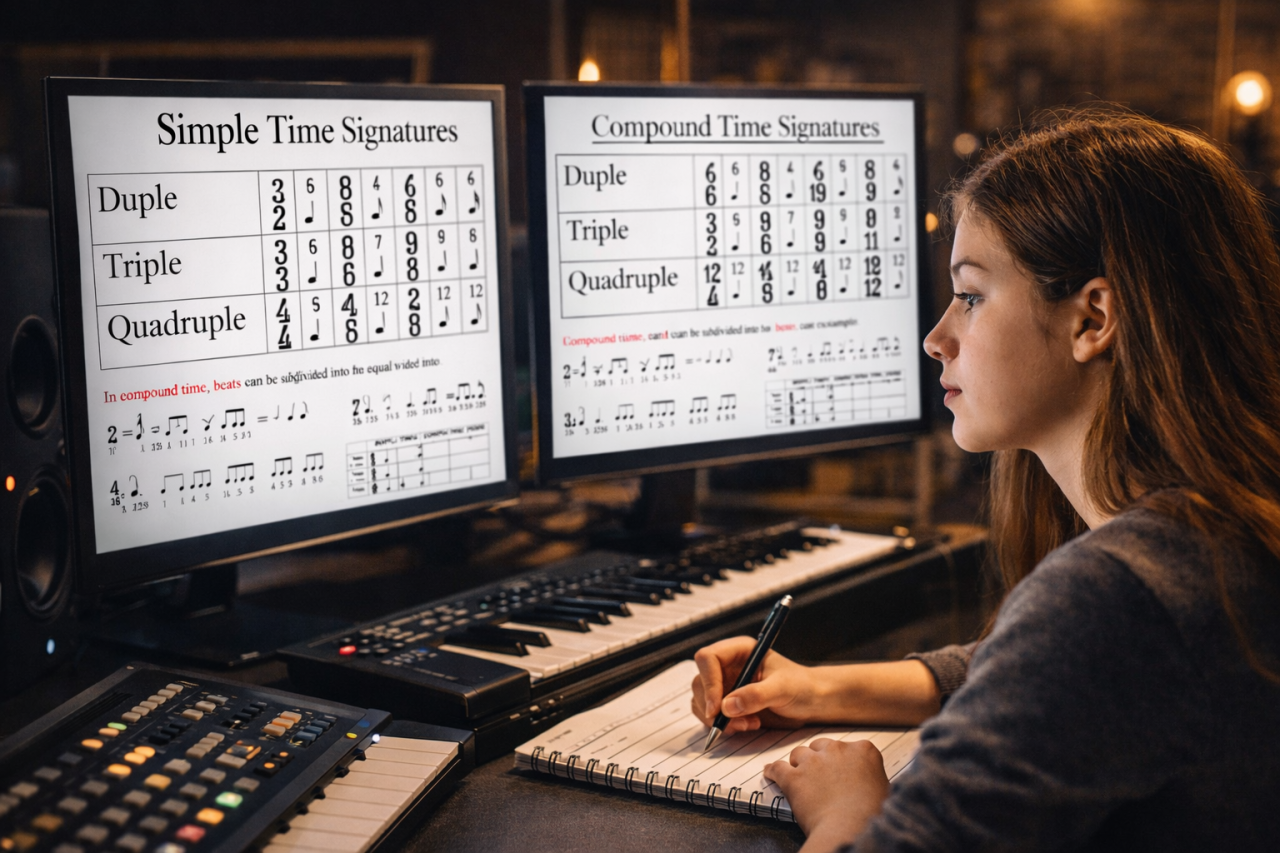
In simple time, the beat divides into two. In compound time, the beat divides into three. So when moving from simple to compound time, the beat must become longer. The easiest way to achieve this is by adding a dot to the beat note value. A crotchet beat in simple time becomes a dotted crotchet beat in compound time.
Triplets also change during this conversion. In simple time, a triplet often shows three notes in the time of two. But in compound time, groups of three are natural, so the triplet marking disappears. On the other hand, where two notes must fit into the space of three in compound time, a duplet may be needed instead.
| Feature In Simple Time | What To Do In Compound Time |
|---|---|
| Plain beat note | Add a dot to the beat note |
| Triplet | Remove it, because three-note division is now natural |
| Two notes needing to fit a compound beat | Use a duplet if required |
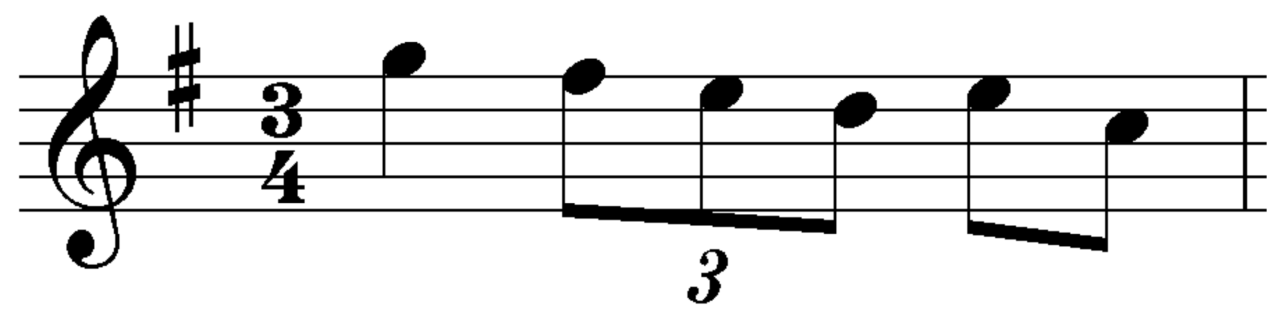
becomes
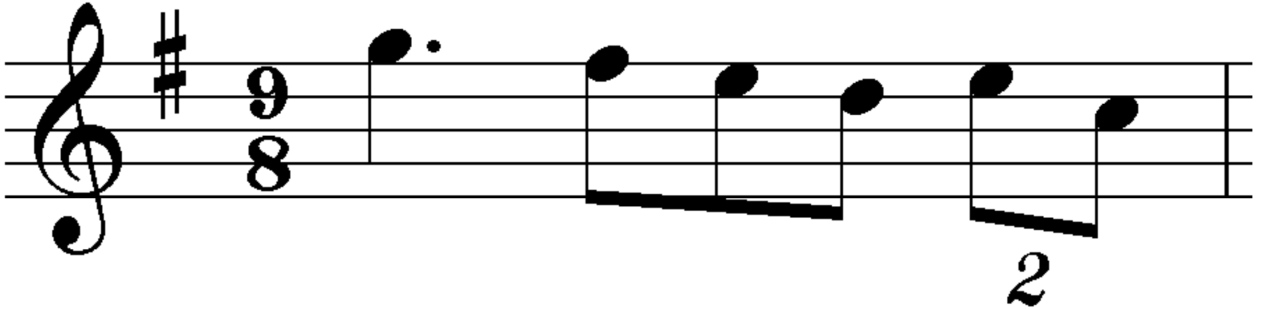
This set of rules is one of the most useful things to memorise for Grade 5 theory. Once you know it, many apparently different questions are really asking for the same process.
Quote Box: A strong way to think about the conversion is this: add dots, remove triplets, and add duplets where needed. That one sentence can guide the whole question.
Practice Guidance For Students
Students often improve quickly once they stop treating every bar as a brand-new puzzle. Most examples are built from the same ideas repeated in slightly different forms. That means progress comes from methodical practice rather than rushing through lots of papers without understanding them.
A useful approach is to take one question type at a time. First practise only identifying time signatures. Then practise only dotted and double-dotted note values. After that, practise changing simple time into compound time. When each skill feels secure on its own, combine them.
It is also important to mark your work properly. If you answer from a PDF, use a tool that allows you to write directly on the page, highlight groups, and save your edits clearly. Clean annotation helps you see what you were thinking and makes it easier to review mistakes later.
Common Mistake: Students sometimes move on after getting an answer right by luck. A correct answer is only useful if you can explain why it is correct. Always be able to justify the beat grouping.
Step-By-Step Practice Routine
Begin by choosing one short theory paper section rather than a full paper. This keeps your concentration sharp and lets you focus on accuracy. Read each time signature option carefully before counting anything.
Next, underline or highlight the groups of notes that clearly belong together. Convert each group into a larger value where possible. Four semiquavers can become one crotchet, two quavers can become one crotchet, and a dotted quaver plus semiquaver can also become one crotchet.
After that, decide whether the bar is behaving like simple, compound, or irregular time. Ask whether the beat divides into two, into three, or into an uneven pattern. This stops you from choosing an answer that only works mathematically.
Then complete one rewriting exercise from simple time to compound time. Add dots to the beat values, remove triplets, and insert duplets if needed. Compare the finished bar carefully with the original to make sure the total duration is still correct.
Finally, review your mistakes immediately. Do not simply mark something wrong and move on. Rewrite the correct version and explain the reason in one sentence. That short explanation is often what turns a weak area into a secure skill.
Exam Preparation And Key Takeaways
Key Takeaways
✅ The fastest way to identify a time signature is to combine counting with note grouping rather than relying on arithmetic alone.
✅ Compound time means the beat divides into three, so larger top numbers such as 6, 9, and 12 often describe grouped beats rather than many separate pulses.
✅ Dotted and double-dotted notes follow one clear rule: each dot adds half the value of what came immediately before.
✅ When rewriting simple time into compound time, the dependable rule is to add dots, remove triplets, and add duplets where necessary.
✅ Careful annotation, slow checking, and reviewing mistakes properly are far more valuable than rushing through many past paper questions.
FAQ
How Do I Know If A Time Signature Is Compound?
A time signature is usually compound when the top number is 6, 9, or 12. In these cases, the beat divides naturally into three equal parts rather than two.
Why Is 6/8 Not Counted As Six Separate Beats?
Because in 6/8 the six quavers are grouped into two beats, with each beat divided into three quavers. The bar contains six quavers, but the pulse is usually felt in two.
What Is The Easiest Way To Remember Dotted Notes?
Remember that one dot adds half the value of the note, and a second dot adds half the value of the first dot. Keep applying that same rule each time.
What Should I Look For First In A Time Signature Question?
Start by reading the answer options and deciding which note value matters most. Then look at the grouping of notes and rests, because the beaming often shows where the beats fall.
How Can I Improve Faster With Past Papers?
Work through one question type at a time, write directly on the page where possible, and review every mistake by explaining why the correct answer works. That kind of active correction builds much stronger understanding.
Categories: : Music Theory
Did this article answer all your questions?
If you have any questions, or you want to learn more,
Click the Picture Below to Join the Community for FREE!