How to Accompany Last Night’s Fun in B Flat on Bouzouki
 Declan Plummer
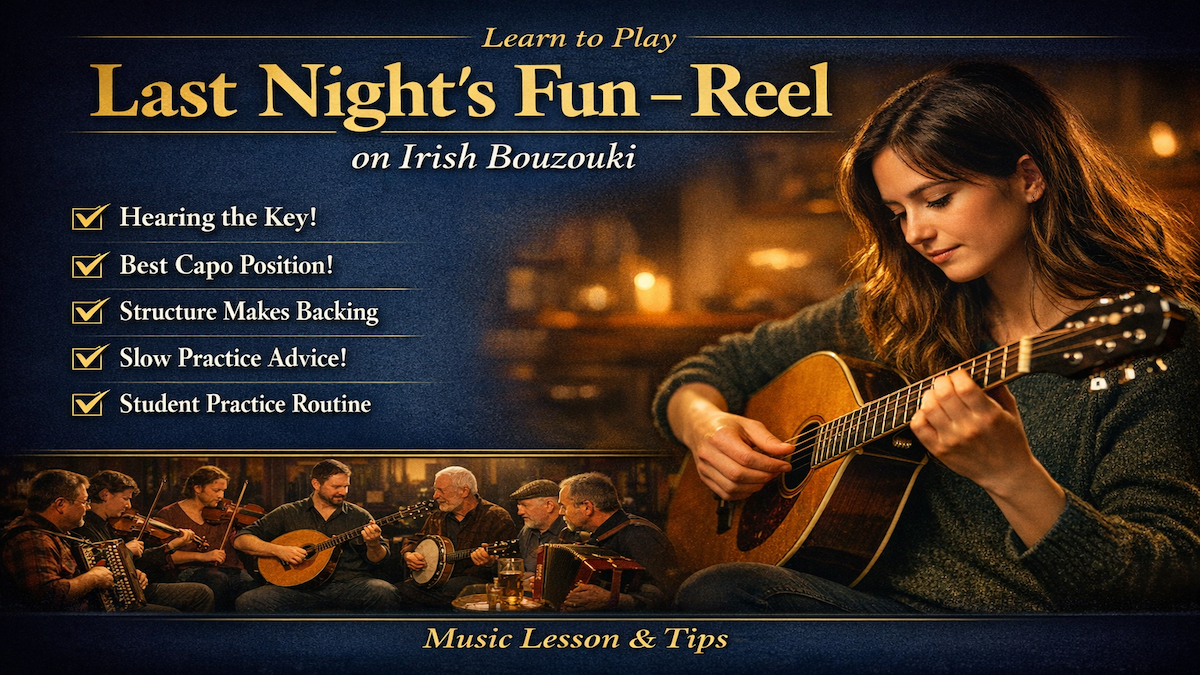
Learn how to accompany Last Night’s Fun in B flat with capo choices, tune structure, and practical bouzouki backing ideas.
How To Accompany Last Night’s Fun In B Flat
This lesson explains how to accompany the reel Last Night’s Fun when it is played in B flat rather than its more familiar D version. The main goal is to find the tonic, choose a practical capo position, hear the tune’s AABB structure, and build accompaniment patterns that support the melody without overcrowding it.
One of the most basic, but crucial, ideas in this lesson is that accompaniment begins with listening. Rather than reaching straight for shapes or memorised chord patterns, the process starts by hearing the drone note, identifying the tonal centre, and then deciding where the instrument will sit most comfortably. That approach is especially important when a familiar traditional tune appears in an unusual key.
In this case, Last Night’s Fun is explored in B flat, which immediately changes the feel of the instrument. On bouzouki, that key can push the accompaniment higher than usual, and that affects both tone and technique. It can sound bright, tight, and even slightly mandolin-like (bluegrass style), so every capo decision shapes not only playability but also character.
The lesson also shows that you do not need to fully learn a tune on a melody instrument before you can accompany it well. What matters is hearing the phrases clearly, recognising repeated sections, and understanding where the melody wants support, where it needs space, and where a simple tonic-based approach will be more musical than constant harmonic movement.
- Find the tonic first by listening for the drone note before trying chord shapes.
- Use the tune’s AABB structure to organise your accompaniment and repeat patterns logically.
- Choose a capo position that supports both tuning stability and musical tone, not just convenience.
Start By Hearing The Key Properly
The first teaching point is simple but essential: before accompanying any Irish traditional tune, find the tonal centre. In the lesson, the tonic is identified by listening for the drone and matching it on the instrument. That process leads to B flat, which is unusual enough to make players pause and rethink the normal setup.
This matters because many traditional players instinctively expect certain reels to sit in familiar instrumental keys. When a tune is shifted, or when a performer chooses a less standard pitch area, accompaniment can feel awkward unless you stop and hear what is actually happening. If you assume the wrong capo position, all later choices become harder than they need to be.
Pro Tip
Sing or hum the home note before touching the instrument. If you can hear the tune settling on one note again and again, you are much more likely to choose a sensible capo position and accompaniment patterns.
Why B Flat Changes Everything
On bouzouki, standard tuning often encourages accompaniment in keys that sit naturally under the fingers when the capo is on the 2nd, 5th and 7th frets (for E Dorian/Aeolian, G Ionian, and A Dorian/Aeolian respectively). B flat does not always offer that familiarity. In the lesson, the player realises that although the melody is lower on the fiddle (4 semitones / frets lower than usual D in fact), the accompaniment may have to sit much higher on the instrument given that the instrument is already tuned to D - it can't go any lower with completely retuning the instrument, so a much higher capo position is required (capo on 8). That reversal is important for students to understand.
A high capo can solve the pitch problem, but it changes the response of the strings. The tone becomes more focused and compact, and the instrument can begin to sound less open. That is not automatically a bad thing. In fact, the lesson suggests that the brighter sound produces an interesting colour, especially for a reel with strong rhythmic energy and can provide a beautiful contrast in a session environment if the previous tune was quite low and resonant.
Choosing The Best Capo Position
A major focus of the lesson is comparing capo positions. Two main solutions emerge. One is to place the capo very high on 8th fret and think in familiar fingering shapes. The other is to place it lower on the 3rd fret and use a more grounded chordal approach. Both work, but they produce different textures and levels of freedom.
The higher option gives a convincing B flat centre and allows the accompaniment to connect more directly with the tune’s upper energy. The lower option can feel heavier and more barred, which may reduce fluidity. By the end of the lesson, the higher placement is preferred because it gives more resonant access to the tonic and feels less restricted in context.
Practice Box
Try the same eight bars with two capo positions. Play once focusing only on tuning stability, then again focusing only on tone. Students often discover that the most comfortable shape is not always the most musical sound.

Comparing The Main Options
| Capo Idea | Musical Effect | Technical Result |
|---|---|---|
| Capo on 8 High, thinking in D shapes | Bright, lively, focused B flat sound | More freedom around tonic notes, but intonation must be checked carefully |
| Capo on 3 Low, thinking in G-related shapes | Warmer and lower-feeling accompaniment | Can feel more restricted because of barred shapes and tighter movement |
| No capo in the tune’s standard D world | Most open and familiar version of the reel | Useful for comparison, but not the same colour as the B flat performance |
This kind of comparison is excellent practice for accompanists. Instead of asking which setup is objectively correct, ask which one best serves the version you are hearing. Traditional accompaniment is often about responding sensitively to a particular performance rather than enforcing a fixed arrangement.
Use The Tune Structure To Build Better Backing
The lesson repeatedly returns to the tune’s form: AABB. That structure is not just a map for melody players. It is also the foundation of accompaniment. Once you hear where the A section repeats and where the B section begins, you can decide where to keep the same pattern, where to thin the texture, and where to create slight contrast.
For example, the A section can be supported with a simpler, more spacious shape while you test the harmonic path. Then, when the B section arrives, you can use a slightly stronger rhythmic profile or a clearer bass movement to show that the tune has entered new ground. Even small changes help the accompaniment sound intentional.
Insight
Good accompaniment does not need constant variety. Often the most convincing support comes from repeating a strong pattern until the tune itself asks for a change.
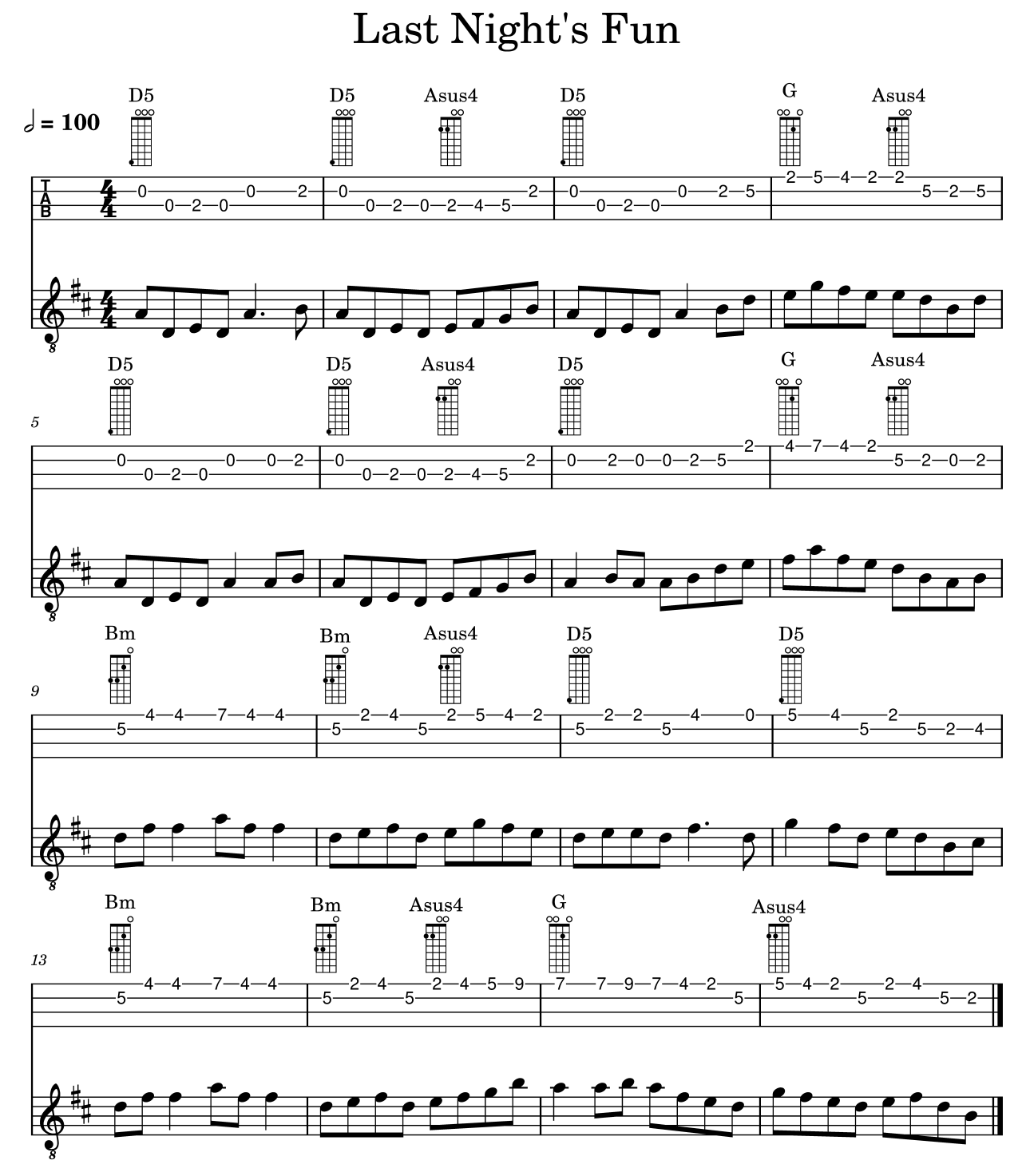
A Simple Structure Breakdown
| Section | What To Listen For | Accompaniment Aim |
|---|---|---|
| A1 | Opening phrase and tonal centre | Keep it light and confirm the key |
| A2 | Repeated material with more confidence | Add a slightly clearer rhythmic pulse |
| B1 | New phrase shape and stronger lift | Support the transition with firmer bass notes |
| B2 | Cadential feel and return energy | Reinforce the tonic and prepare the repeat |
Keep The Accompaniment Musical Rather Than Busy
Another strong lesson here is restraint. The player experiments with several possible patterns, some more melodic and some more percussive, but the overall aim remains clear: do not smother the reel. Traditional accompaniment works best when it supports lift, pulse, and tonal direction while leaving room for ornaments, phrasing, and melodic variation.
That is why tonic notes and clear intervals become so important. In a tune like this, where the key already creates extra colour, the accompaniment does not need to prove itself with excessive complexity. Sometimes a solid drone-informed texture does more for the tune than a sequence of clever but distracting chords.
Common Mistake
Students often think a difficult key means they need more chord changes. Usually the opposite is true. In an unusual tuning situation, simplify the harmony first and let your ear guide any extra movement.
Why The Tune Can Feel Slightly Bluegrass-Like
A particularly interesting observation in the lesson is that the high capo position creates a sound world that almost suggests bluegrass or old-time string playing. That does not mean the tune stops being Irish or undesirable. It means timbre influences perception. High fretted accompaniment can sharpen attack, shorten resonance, and bring out a more driving edge.
For advanced students, this is an excellent reminder that accompaniment style is not only about harmonic vocabulary. Register, sustain, and instrument response all shape the listener’s impression. Even when using very simple material, you can change genre flavour slightly just by changing where the instrument speaks.
Why Slow Practice Still Matters For Reels
Although reels are associated with energy and motion, this lesson repeatedly shows the value of slowing everything down. The player checks endings, repeats sections, isolates small pitch problems, and tests how patterns sit against the melody. That is exactly how students should practise. Speed is not the first priority. Clarity is.
A slower practice tempo lets you confirm whether the accompaniment truly lines up with the melodic phrasing. It also reveals whether your chosen capo setup is practical over several repetitions. Something that feels acceptable for one pass can become tiring, awkward, or tonally unconvincing after four full cycles.
Practice Box
Work below performance speed until you can hear every phrase ending clearly. Then increase tempo only when the pulse feels settled and your accompaniment pattern stays relaxed.
Practice Routine
Use the following routine to practise this lesson in a focused and musical way.
- Listen to one full performance of Last Night’s Fun and identify the home note by ear before playing anything.
- Play the tonic note on your instrument and test two possible capo positions that allow you to support B flat comfortably.
- Mark the tune as AABB and clap the phrase lengths so you can feel the structure without the distraction of fingerings.
- Create one very simple accompaniment pattern for the A section using tonic support and minimal movement.
- Add a slightly stronger bass or rhythmic lift for the B section, but keep the harmony restrained.
- Practise the full tune slowly with a click or steady backing pulse, listening for tuning and phrase endings.
- Record yourself and compare the higher and lower capo versions, choosing the one that sounds most convincing rather than merely easiest.
Key Takeaways
✅ The best accompaniment begins with hearing the tonic clearly and confirming the real key of the performance.
✅ In an unusual key such as B flat, capo position affects both technique and musical character, so test sound as carefully as fingering.
✅ The AABB structure gives you a reliable framework for deciding where accompaniment should stay simple and where it can grow slightly.
✅ Strong accompaniment does not need constant harmonic complexity; supportive tonic-centred playing is often more effective.
✅ Slow practice, repeated listening, and direct comparison of options lead to better traditional accompaniment than rushing into a final pattern.
FAQ
Do I Need To Learn The Full Melody Before I Can Accompany The Tune?
No. You do need to hear the melody clearly, understand where the phrases begin and end, and recognise the overall form. However, you can build a strong accompaniment by listening carefully and identifying the tonic, the structure, and the moments where the tune needs support.
Why Would A Reel Be Played In B Flat Instead Of D?
Players sometimes choose a different key because of the instrument they are using, the tone they want, or the version they have learned from another performer. A change of key can create a fresh colour and may suit one instrument better than another.
Should I Always Choose The Most Comfortable Capo Position?
Not always. Comfort matters, but tone, freedom of movement, and how clearly the tonic speaks are equally important. A position that feels slightly unfamiliar may still produce the most convincing accompaniment for that specific version of the tune.
How Much Harmony Should I Add To Traditional Accompaniment?
Usually less than you first think. Start with the tonic and the most necessary harmonic movement. Once the pulse feels secure and the melody remains clear, you can add more colour carefully. Too much harmonic activity can distract from the tune’s lift and phrasing.
What Is The Best Way To Practise Accompanying Reels?
Listen repeatedly, work slowly, map the structure, and test one clear pattern at a time. Recording yourself is especially helpful because it lets you hear whether your accompaniment supports the tune naturally or whether it is becoming too heavy, too bright, or too busy.
Categories: : Irish Traditional Music
Did this article answer all your questions?
If you have any questions, or you want to learn more,
Click the Picture Below to Join the Community for FREE!