How to Relearn an Irish Tune Correctly After Learning It Wrong!
 Declan Plummer
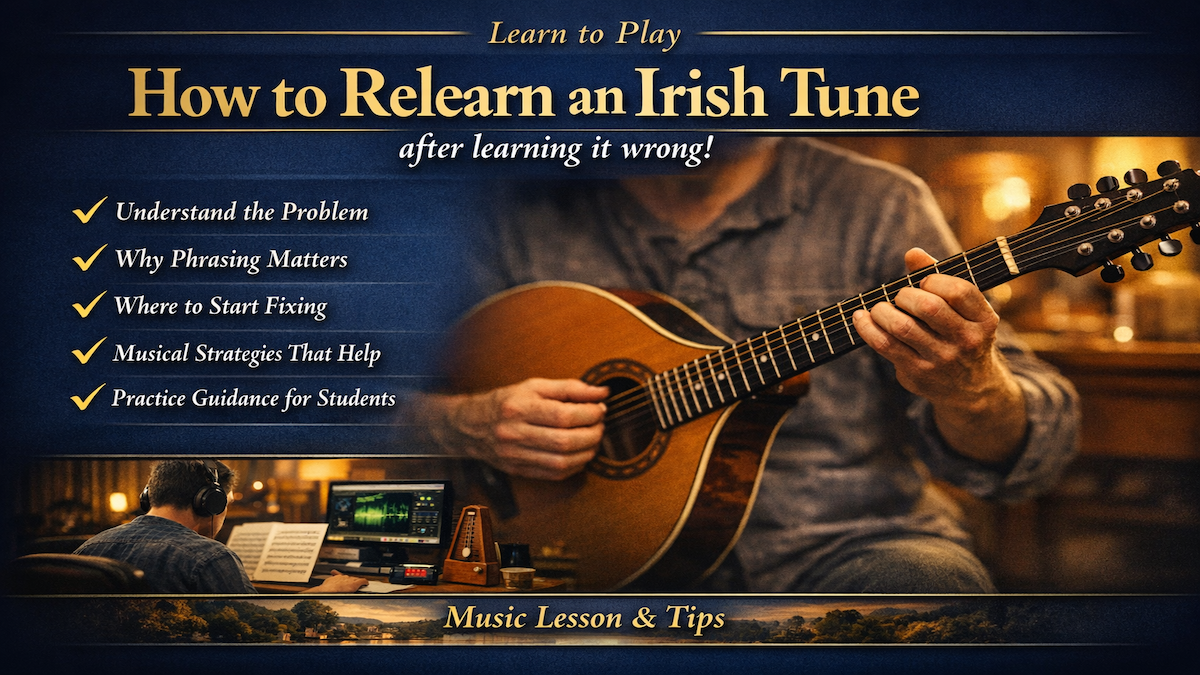
Learn how to fix mistakes in Irish tunes with slow practice, better listening, and clear phrase structure.
How To Relearn A Tune Correctly After Learning It Wrong
When you realise you have learned an Irish tune incorrectly, the best approach is to slow everything down, return to the original melody, compare reliable recordings, and rebuild the phrasing step by step. This lesson uses The Anglers Rock to show how careful listening and methodical practice can correct bad habits.
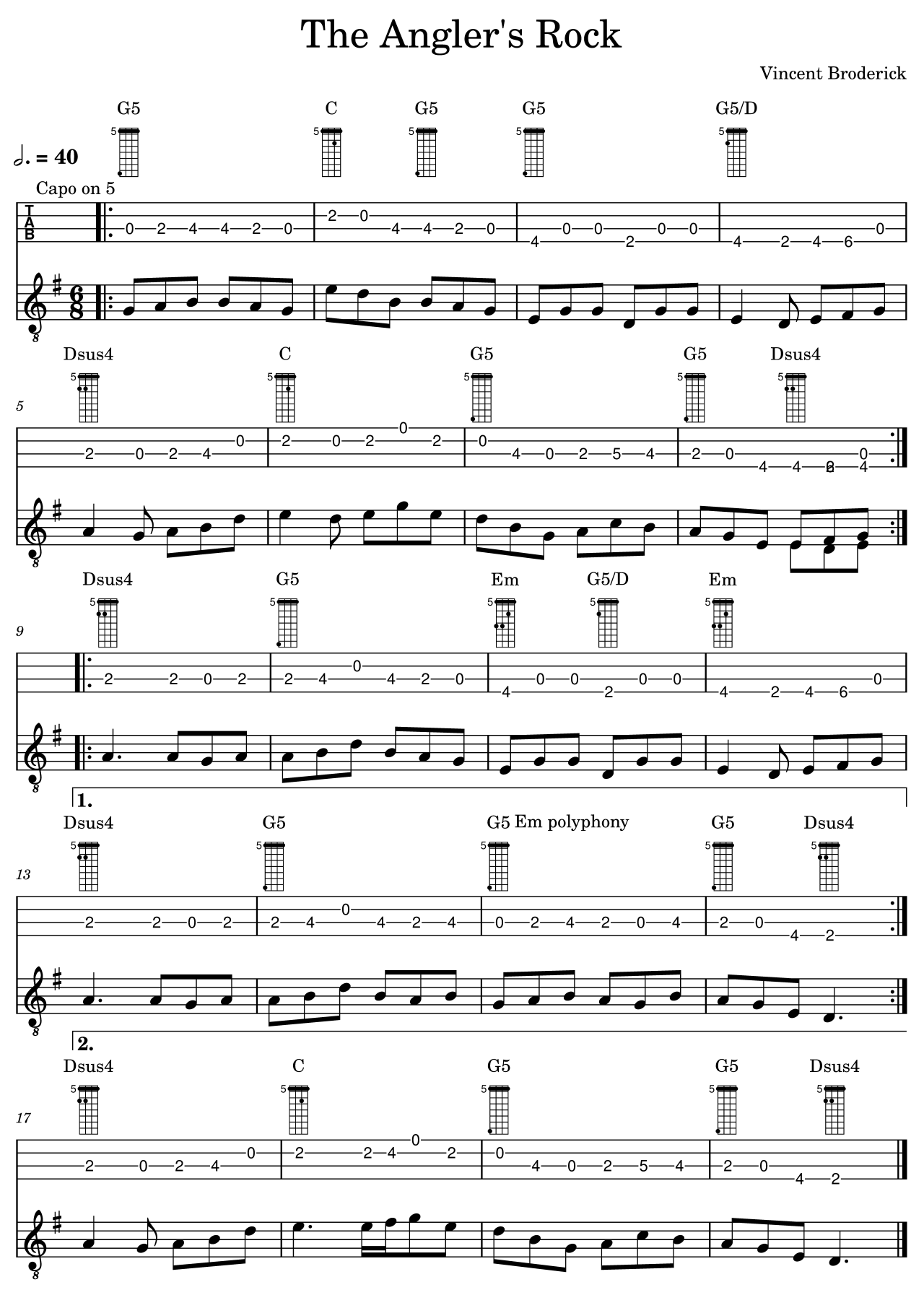
This lesson centres on a very honest and useful musical problem: discovering that a tune you have played for years is actually starting in the wrong place. In this case, the tune was The Anglers Rock, and the issue was not a tiny detail. One misplaced bar affected the phrasing, the chord changes, the entry points, and the shape of the whole tune.
What makes this especially valuable for students is that it shows real practice in action. Rather than hiding the mistake, the lesson demonstrates how to diagnose it, why the error happened, and what to do when your ear, memory, and muscle habits are all pulling you in the wrong direction.
For anyone learning Irish traditional music on bouzouki, tin whistle, or another melody or accompaniment instrument, this is an important reminder that accuracy is built through listening, patience, and phrase awareness. The real skill is not only learning tunes, but learning how to correct them properly when something has gone wrong.
- A tune learned one bar late can throw off every chord change and phrase ending.
- The safest way to fix a wrong version is to return to the melody and compare several reliable recordings.
- Slow practice, singing, looping sections, and rebuilding the structure help you unlearn bad habits effectively.
Understanding The Problem In The Tune
Why Starting In The Wrong Place Causes Bigger Problems
The central issue in this lesson was that the tune had been learned beginning a bar later than it should have. At first, that may sound like a small mistake, but in Irish traditional music phrase placement matters enormously. Once the starting point moves, everything after it shifts as well. Chords feel early or late, phrase endings no longer feel settled, and the second half of the tune can become very confusing.
That is exactly what happened here. The accompaniment had been built around the wrong structure, so when playing along with a correct recording, nothing lined up comfortably. Even though the player knew the tune well in one sense, he was working from a version that was structurally misplaced.
PRO TIP: When a tune suddenly feels awkward against a recording, do not assume your hands are the problem first. Check whether your phrase structure, starting note, or bar placement is actually correct.

Why Phrasing Matters So Much In Irish Traditional Music
A very useful teaching point from this session is the idea of balance in phrase structure. Much Irish traditional music is built in clear, even units, often in four-bar or eight-bar groupings. When that balance is disturbed, the tune may begin to feel incomplete or oddly stretched, even if the notes themselves seem plausible.
In this case, the wrong version seemed convincing because it produced phrase endings that felt musically complete to the player. That is why mistakes like this can linger for years. A wrong version can still sound musical in isolation. The real test comes when you compare it with the wider tradition, with correct recordings, and with the natural flow of the tune.
INSIGHT: A tune can sound convincing and still be wrong. Good phrasing is not just about what feels comfortable in the moment, but about how the melody and structure work together across the whole tune.
How To Diagnose A Tune You Have Learned Incorrectly

Compare Several Trusted Versions
One of the most important lessons here is not to rely on a single source. The player first noticed the problem while trying to accompany a recording, then confirmed it by checking notation and listening to multiple versions, including performances associated with the tune’s proper tradition. That comparison made it clear that the issue was not a small variation, but a genuinely incorrect structure.
This is excellent advice for students. If you only learn from one online video or one informal transcription, you may accidentally absorb someone else’s mistake. Listening to several versions gives you a much stronger sense of what is essential in the tune and what counts as personal variation.
PRACTICE BOX: Before deciding that your version is correct, listen to at least three recordings. Focus on where the tune begins, where the phrases settle, and how the second half leads back to the first.

Slow The Tune Down And Isolate Sections
Rather than trying to force the entire tune at normal speed, the session repeatedly returned to slower practice. Short sections were looped, the A section was examined on its own, and the second half was treated as a separate challenge. This is exactly the right response when bad habits have become ingrained.
Slow practice is not merely about making the tune easier. It gives you time to hear where the bar really begins, to place the correct chord under the melody, and to feel the phrase shape without panic. When relearning a tune, speed usually hides the problem. Slowness reveals it.
COMMON MISTAKE: Students often try to correct a tune by playing it repeatedly at full speed. That usually strengthens the old habit instead of replacing it. A wrong pattern played quickly just becomes a faster wrong pattern.
Musical Strategies That Help Rebuild The Tune

Sing The Melody And Hear The Chords Above It
A particularly helpful idea from the lesson was to sing through the melody while practising. Singing trains the ear to follow the actual musical line rather than the habit stored in the fingers. It also helps you hear where the harmony belongs. If you can sing the phrase clearly, you are much more likely to place the accompaniment correctly underneath it.
This is especially useful for accompanists. The melody always comes first. If the accompaniment is not supporting the real melodic shape, then even interesting chords will feel misplaced. Singing brings the focus back to what matters most.
INSIGHT / QUOTE: “The melody is always more important than the accompaniment.” That single principle can prevent a great many accompaniment problems in traditional music.
Use New Material To Break Old Habits
Another strong teaching point was the suggestion to create or insert slightly different musical material in order to rewire the brain. When an old incorrect version is deeply ingrained, trying to correct it by moving everything can feel mentally impossible. Sometimes it is easier to build a fresh cue, a counter-line, or a new chord pattern that makes the correct version feel genuinely different.
This approach is extremely practical. It acknowledges that relearning is not simply deleting the old version. It is building a stronger new pathway. New musical cues can make that process much more secure.
PRACTICE BOX: If the correct version still feels like the old version shifted sideways, create a fresh marker. That could be a sung cue, a new chord colour, or a small harmony idea that reminds you where the true phrase begins.
Structure Breakdown Table
| Practice Stage | What To Focus On | Why It Matters |
|---|---|---|
| 1. Find The Correct Start | Locate the real opening bar and first phrase. | This prevents every later chord and entry from being displaced. |
| 2. Loop The A Section | Repeat slowly until the phrase feels natural. | This rebuilds confidence before tackling the whole tune. |
| 3. Separate Melody And Chords | Sing or whistle the tune before accompanying it. | This restores the melody as the main guide. |
| 4. Rebuild The B Section | Watch repeat points, returns, and second endings carefully. | This is where many structural errors become obvious. |
Practice Guidance For Students
Go Back To Basics Without Embarrassment
A powerful part of this lesson is the willingness to strip everything back and start again. That is the right attitude for any student. There is no shame in returning to the melody, in checking your phrasing, or in admitting that something you learned years ago needs to be corrected.
In fact, this kind of rebuilding teaches much more than the tune itself. It develops listening, self-correction, structural awareness, and humility. Those skills will improve every future tune you learn.
PRO TIP: Treat difficult corrections as technical training, not failure. You are not only fixing one tune; you are learning how to identify mistakes, compare interpretations, and strengthen your overall musicianship.
Step-By-Step Practice Routine
Begin by listening to two or three good recordings of the tune without playing. Your only job is to hear the true opening, the phrase endings, and the shape of both sections. Do not trust muscle memory at this stage.
Next, sing or whistle the first section slowly until you can feel where the bars settle naturally. Then add your instrument, still at a reduced speed, and play only that section several times. If accompaniment is your focus, sing the melody quietly while placing simple chords underneath it.
After that, isolate the place where your old version keeps returning. Loop that bar or short phrase. Practise it slowly with the correct lead-in and the correct continuation so that the brain hears it in context rather than as an isolated correction.
Move on to the second half only when the first half feels stable. Pay special attention to repeat points, second endings, and any place where your old phrasing used to suggest the wrong entry. Use a metronome or slowed recording if necessary.
Finally, play the full tune gently from beginning to end, then record yourself and listen back. If a problem remains, return to that exact spot rather than restarting mindlessly from the top. This is how steady correction becomes lasting improvement.
Lesson Summary
Key Takeaways
✅ A tune learned from the wrong starting bar can disrupt phrasing, chord placement, and confidence throughout the whole performance.
✅ The best way to correct a wrong version is to slow down, compare several trustworthy recordings, and rebuild the melody before rebuilding the accompaniment.
✅ Singing, looping small sections, and focusing on structure are highly effective tools when breaking bad habits in Irish traditional music.
✅ Careful relearning is never wasted time, because it strengthens ear training, self-awareness, and long-term musical accuracy.
FAQ
How Do I Know If I Learned A Tune Wrong Or Just Learned A Different Version?
A genuine variation will usually preserve the tune’s overall structure and phrasing, even if certain notes or ornaments differ. If your version causes the whole tune to begin in the wrong place, shifts the chord pattern, or clashes with several reliable recordings, it is more likely that you learned it incorrectly rather than simply learning an accepted variation.
Should I Stop Playing The Tune Completely While Fixing It?
Not necessarily, but you should stop reinforcing the wrong version. That means reducing the speed, avoiding automatic full-speed play-throughs, and spending more time on short corrected sections. The goal is to replace the old habit, not keep switching randomly between two versions.
Why Is Singing Helpful If I Am An Accompanist?
Singing forces you to hear the real shape of the melody. Once you can hear and sing the phrase clearly, it becomes much easier to place supportive chords in the right place. This is especially important in Irish traditional accompaniment, where the melody should always lead the harmony.
Is It Worth Spending This Much Time On One Tune?
Yes, because the value is bigger than the tune itself. Careful work like this develops listening, timing, phrase awareness, problem-solving, and the ability to compare different interpretations. Those skills transfer directly into every other tune you learn afterwards.
What Is The Best First Step If I Think My Version Is Wrong?
The best first step is to stop guessing and listen carefully to several respected recordings. Identify the true start of the tune, sing the opening phrase, and then rebuild the piece slowly from there. That prevents the wrong version from becoming more deeply embedded.
Categories: : Irish Traditional Music
Did this article answer all your questions?
If you have any questions, or you want to learn more,
Click the Picture Below to Join the Community for FREE!