How To Accompany Reels on Irish Bouzouki - Pigeon On The Gate
 Declan Plummer

Learn how to accompany Pigeon on the Gate on Irish bouzouki using drones, simple chords, and tasteful counter-melodies for strong traditional rhythm.
How To Accompany Pigeon On The Gate On Irish Bouzouki
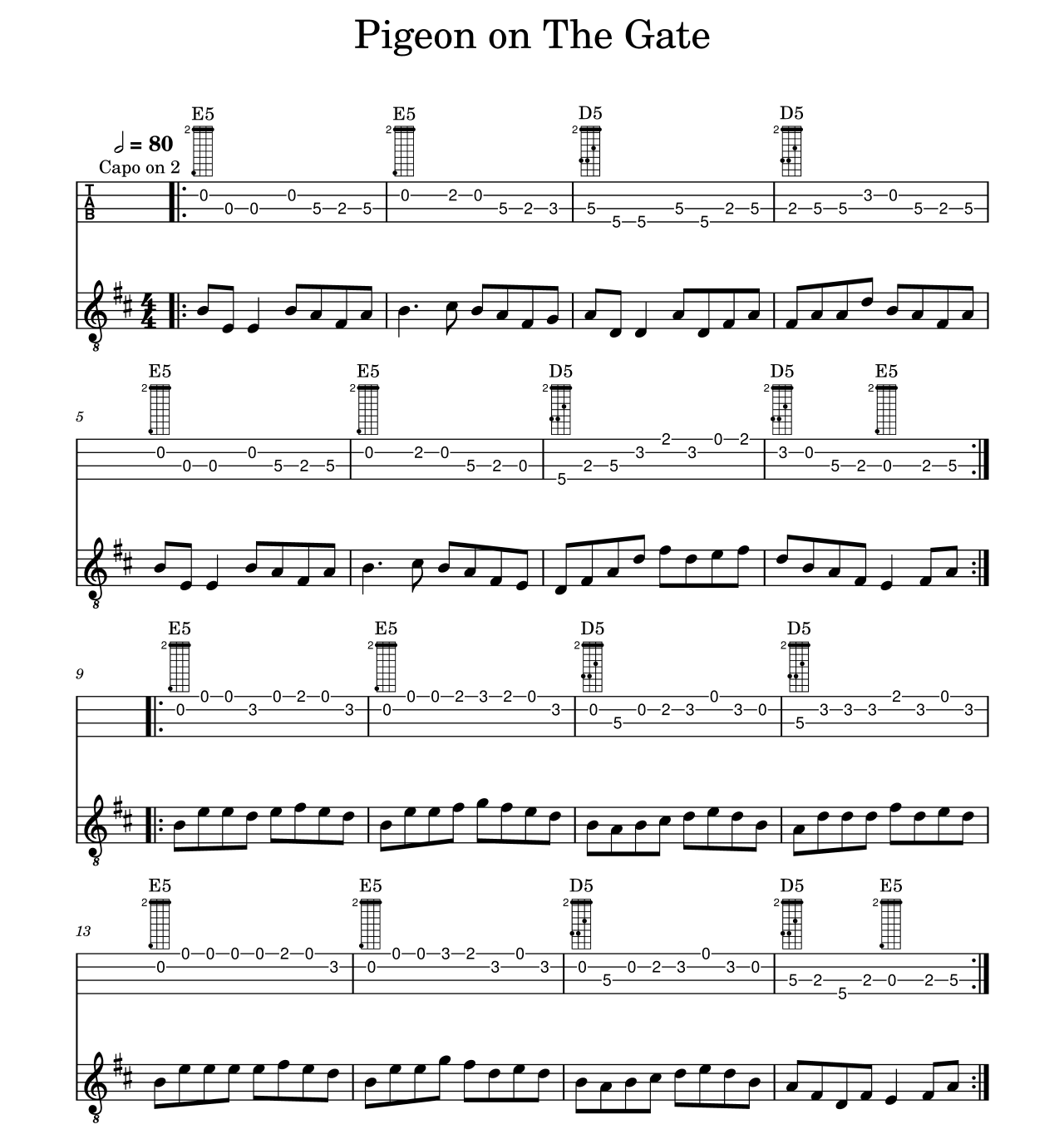
This lesson shows how to build a strong Irish bouzouki accompaniment for Pigeon On The Gate by finding the tonic first, using a simple E5 to D5 framework, and gradually adding small counter-melodies, rhythmic variation, and tasteful movement without disturbing the reel’s steady pulse.
One of the most useful skills in Irish bouzouki playing is learning how to do a lot with very little. In this tune, the harmony stays open and droney for long stretches, which means the accompanist has space to shape the groove, support the melody, and introduce small variations without overcrowding the music.
Rather than thinking in terms of many complicated chords, this lesson focuses on listening carefully, locating the tonal centre, and then building accompaniment in layers. That approach makes the tune easier to learn, easier to remember, and much more flexible in real playing situations.
The main idea throughout is simple: start with the safest version first, then elaborate only when the rhythm feels secure. That is how solid accompaniment develops into expressive accompaniment.
- Find the tonic before worrying about chords or ornamentation.
- Use a simple drone-based E5 to D5 accompaniment as the foundation.
- Add counter-melodies and rhythmic ideas gradually so the groove stays clear.
Start By Finding The Tonic
Before choosing chord shapes, the lesson begins by humming the tonic against the melody. This is an excellent habit because it anchors the ear before the hands get involved. Once the tonic is identified, the accompaniment becomes much easier to organise.
In this case, the tonal centre is heard as E, with the tune leaning toward an E Dorian sound rather than a plain minor. That matters because the mode affects which colour notes will sound natural and which ones may clash. The accompaniment is therefore not built from random shapes, but from a clear sense of tonal gravity.
Pro Tip: If you can sing the tonic while the tune is playing, you are much more likely to choose chords and melodic fills that actually support the tune instead of fighting against it.
Use The Capo To Simplify The Tune
With the capo on the second fret, the open-course sound becomes especially useful. Instead of constantly reaching for complicated voicings, the bouzouki can rely on strong power-chord shapes and ringing open strings. This creates the spacious sound that suits reels so well.
A key point from the lesson is that the accompaniment mainly moves between E5 and D5. That may sound too simple on paper, but in practice it gives the player freedom. When the harmonic movement is limited, the interest can come from pulse, texture, articulation, and short melodic gestures.
Insight: Tunes with long drone sections can feel deceptively easy. In reality, they demand careful control, because the accompanist has more freedom and therefore more responsibility.
Keep The Strumming Focused
Another important teaching point is that you do not always need the full four-course sound. Much of the accompaniment here works perfectly well using only the first, second, and third courses. That lighter approach helps the player stay agile and leaves more room for melodic detail.
This is especially useful when adding hammer-ons, slides, and little internal movements. In a very loud session, or when extra bass is needed, the fourth course can add weight. But in smaller settings, and especially in teaching or home practice, the top three courses often give a cleaner and more controlled sound.
Common Mistake: Many players assume fuller always means better. In fact, adding the fourth course all the time can make the accompaniment heavier, less flexible, and harder to shape rhythmically.
Chord Progression And Structure At A Glance
The tune gives repeated opportunities to alternate between a tonic drone and a neighbouring chord shape. A simple visual plan helps keep the form clear while leaving space for variation.
| Section | Main Harmonic Feel | Accompaniment Goal |
|---|---|---|
| A SectionS | E5 to D5 drone movement | Establish pulse and leave space |
| A Section Repeat | Same framework with variation | Introduce one or two fills |
| B Section | Still largely droney | Re-use ideas with slight contrast |
Build Counter-Melodies In Layers
A major theme of the lesson is elaboration. Instead of trying to improvise a polished accompaniment from the start, the player begins with the most basic drone and then gradually expands it. This is much more effective than forcing complexity too early.
The first stage is simply strumming the open or near-open framework cleanly. The next stage adds a small hammer-on. After that, short melodic shapes can be inserted on the first or second course. Eventually, those shapes can be extended into fuller counter-melodies that connect one harmonic point to the next.
This layered method is valuable because it teaches control. Every added idea is still connected to the original groove. Nothing is decorative for its own sake. Each variation grows naturally out of the simpler version underneath it.
Practice Box: Play the tune three times through. On the first pass, use only the drone. On the second pass, add one hammer-on figure. On the third pass, add one higher melodic answer only at the end of phrases.
Useful Melodic Direction Ideas
The transcript demonstrates several related variations: low, middle, and high versions of short figures, plus further offshoots from the top shape. This is a very musical way to think. Instead of learning many unrelated licks, learn one idea and then move it to a different register or reshape its ending.
One especially useful observation is that some figures work better when reversed. A line that descends in one tune may sound stronger ascending in another. This is an excellent reminder that accompaniment patterns are not fixed formulas. They are materials that can be inverted, reordered, shortened, or extended according to what the tune needs.
The goal is not to fill every bar. The goal is to have a small palette of reliable shapes that can be dropped in when there is room for them. In real playing, restraint nearly always sounds more convincing than constant movement.
Watch The Mode When Adding Colour Notes
An important warning appears later in the lesson: not every colour chord works in every Dorian context. A major shape may sound fine in one setting, but in another tune the melody may clearly require the minor version instead. This is where listening must lead theory.
In practical terms, the accompanist should test any added chord against the melody. If the note clashes with an important melodic pitch, especially in a sustained moment, it should be changed or removed. Bouzouki accompaniment works best when it enhances modal colour rather than forcing a harmony that does not belong.
Quote Box: Good accompaniment is not about adding more notes. It is about choosing the right notes for the mode, the moment, and the melody.
How To Practise This Lesson Effectively
This lesson also shows an honest practice process. Ideas are tried, rejected, refined, and tried again. That is exactly how accompaniment develops. Students often assume that strong accompanists always know instantly what to play, but the reality is usually a mixture of listening, experimenting, and gradually keeping what works.
A very sensible approach is to slow the tune down, loop sections, and test one figure at a time. This helps you hear whether your rhythmic placement is accurate and whether the phrase lands naturally before the next chord. It also makes it easier to notice small details such as pauses before a target chord or the exact place where a fill should finish.
Practice Box: Record yourself playing the accompaniment with no fills at all. Then record a second version with only one added idea. Compare them. If the second version weakens the pulse, remove the fill and try a simpler one.
Step-By-Step Practice Routine
Start by listening through the tune several times without playing. Hum the tonic and confirm where the tonal centre sits on the instrument.
Next, place the capo on the second fret and play only the basic E5 and D5 framework using the first three courses. Keep the rhythm even and do not add any ornamentation yet.
Then practise the A section on its own. Add one small hammer-on figure and repeat it until it feels comfortable. After that, try one higher melodic version of the same idea.
Move on to the B section and keep the accompaniment simple again at first. Notice where the same ideas can be reused and where a slight contrast helps the tune breathe.
Once both sections feel secure, play the whole tune through several times. On each repetition, allow yourself only one new variation. This prevents overplaying and trains you to choose your moments carefully.
Finally, record a complete run-through at a moderate tempo. Listen back and check three things: is the pulse steady, do the fills land in the right place, and does the tune still sound open and droney rather than crowded?
Key Takeaways
✅ Find the tonic first, because once the tonal centre is clear, the accompaniment becomes much easier to map out.
✅ A simple drone-based framework can produce a rich accompaniment when the rhythm is steady and the phrasing is controlled.
✅ Use the first three courses when you want a lighter, more flexible sound for counter-melodies and internal movement.
✅ Build ornamentation in layers rather than trying to improvise a finished accompaniment immediately.
✅ Always check extra colour notes against the mode of the tune, because the wrong version of a chord can undermine the melody.
FAQ
Do I Need Lots Of Chords To Accompany This Reel?
No. One of the strengths of this lesson is that the tune can be supported with a very small harmonic palette. The challenge is not learning many chords, but making a few simple shapes sound musical and well timed.
Should I Always Use The Fourth Course?
Not always. The fourth course is useful when you need more bass or more weight, but many of the most effective ideas in this lesson work better on the top three courses because they are cleaner and easier to shape.
When Should I Add Counter-Melodies?
Add them only after the groove feels secure. A counter-melody should sound like a natural extension of the accompaniment, not like a distraction from it. Phrase endings and repeated sections are often the best places to begin.
What If My Added Chord Sounds Wrong?
That usually means the chord colour does not match the mode or the melody note at that moment. Strip the accompaniment back to the drone, listen again, and reintroduce the added note only if it supports what the tune is actually doing.
Is It Better To Plan Everything In Advance?
For practice, it helps to prepare a few reliable ideas. In live playing, however, some freedom is useful. The best approach is to know a handful of dependable figures well enough that you can choose them naturally in the moment.
Categories: : Irish Traditional Music