Understanding Lord Inchiquin On Irish Bouzouki
 Declan Plummer
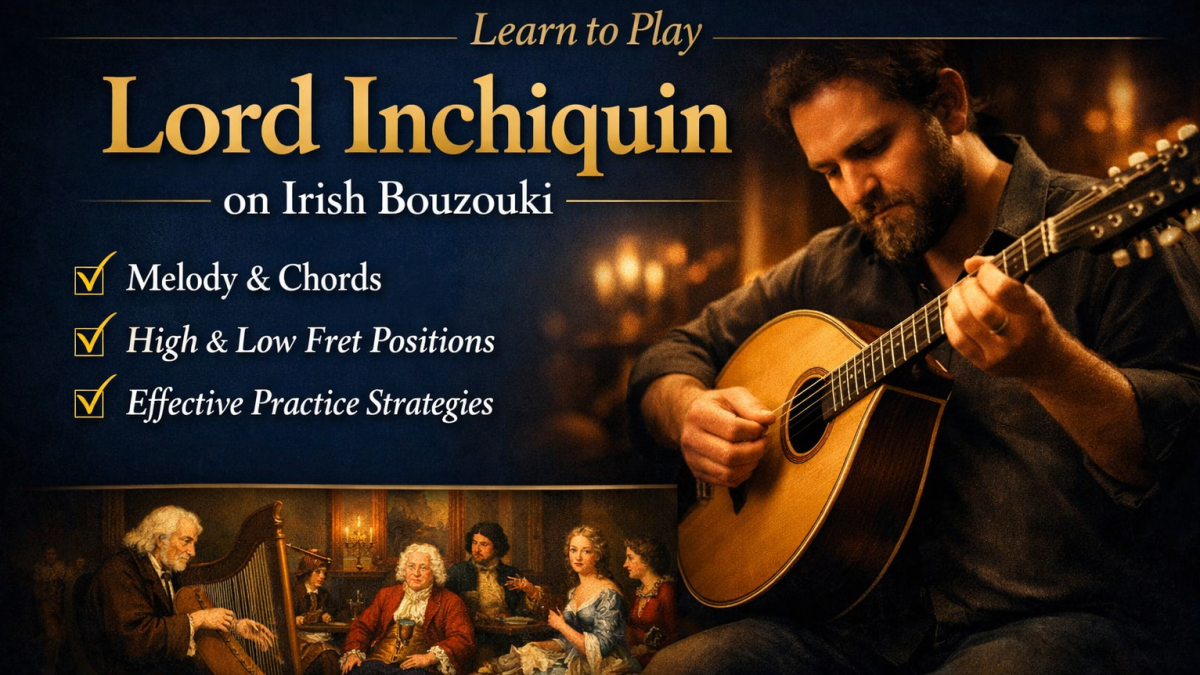
Learn how to practice Irish bouzouki smarter with focused strategies, slow practice, and techniques for faster musical progress.
Understanding Lord Inchiquin On Irish Bouzouki
Lord Inchiquin is a beautiful Irish harp tune composed by Turlough O’Carolan. On Irish bouzouki it works particularly well as a melody-plus-chords arrangement, combining open drone strings, simple chord harmony, and melodic movement across the courses. The key challenge lies in the B section, where position shifts and cross-string picking become more technically demanding.
This lesson explores how to approach the tune step-by-step on Irish bouzouki, focusing on melody placement, chord support, and the technical movement required to move between positions cleanly. While the opening section is relatively straightforward, the second half introduces shifts up the neck that require careful preparation and relaxed hand movement.
The goal is not simply to play the notes of the tune, but to develop a practical accompaniment style that blends melody and harmony in a musical way. By understanding how the chords relate to the melody, the piece becomes far easier to learn and far more satisfying to perform.
- Lord Inchiquin works well as a melody-plus-chords arrangement on Irish bouzouki.
- The A section is mostly built around a D chord with only a few harmonic changes.
- The B section introduces higher-position playing and cross-string movement.
- Strategic use of open strings allows smooth position shifts.
- Breaking the tune into small practice sections makes learning far easier.
Structure Of The Tune
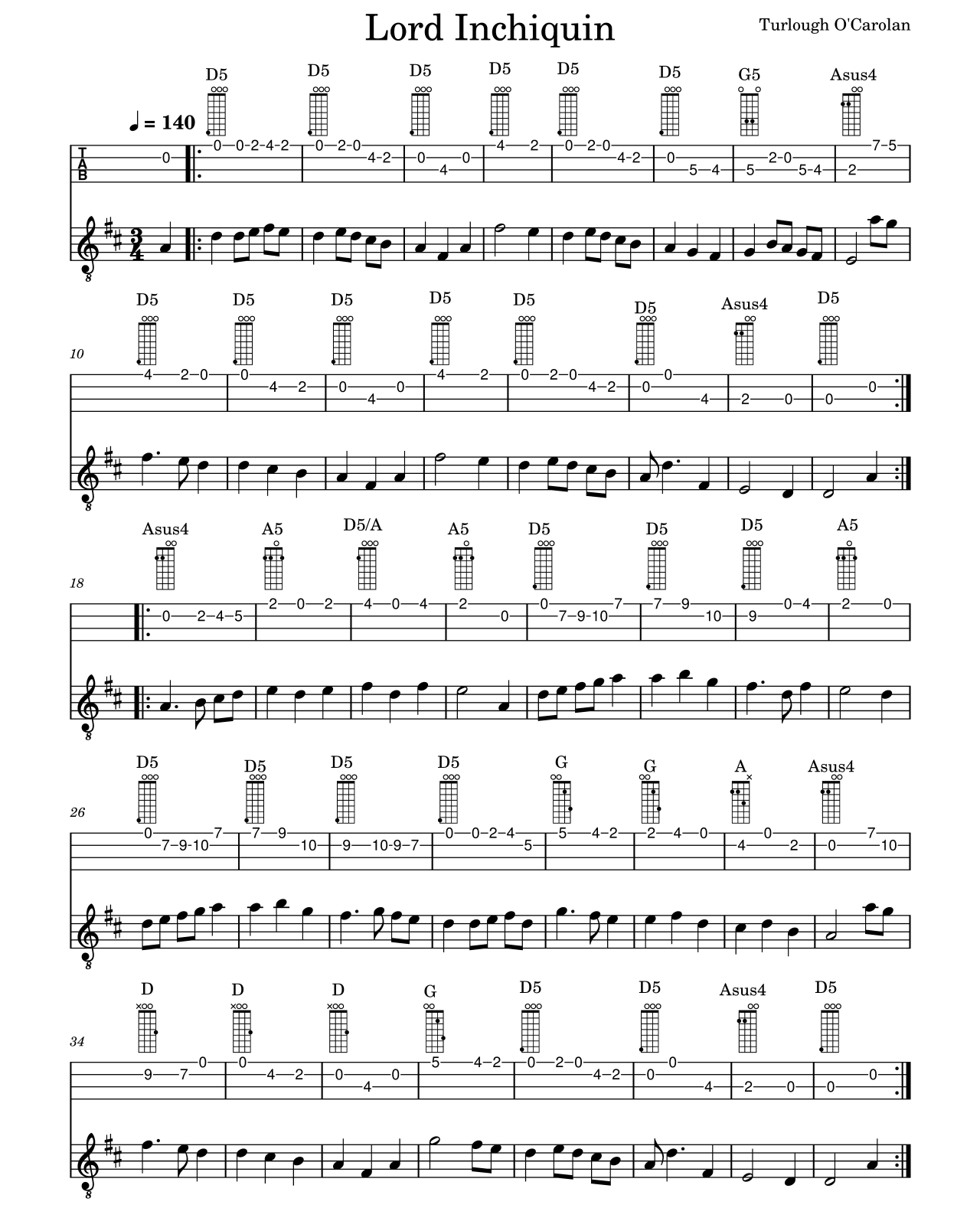
Like many Irish traditional tunes, Lord Inchiquin follows a clear two-part structure consisting of an A section and a B section. Each section contains eight bars and is typically played twice. Understanding this structure helps you learn the tune logically rather than trying to memorise the entire piece at once.
| Section | Musical Character | Difficulty Level |
|---|---|---|
| A Section | Mostly centred around D with simple chord movement | Beginner–Intermediate |
| B Section | Higher position playing and cross-string melody | Intermediate |
The A section acts as the musical foundation of the tune. The melody sits comfortably within the lower position of the instrument, and the chord progression remains stable for long stretches. This allows you to focus on tone, timing, and clean strumming.
The B section, by contrast, introduces more movement up the fretboard and requires greater coordination between the fretting hand and picking hand. Learning to anticipate these movements is the key to playing the tune smoothly.
Before attempting chords and melody together, play through the melody on its own several times. This helps your ear internalise the phrasing of the tune and makes the later chord integration much easier.
Chord Progression Overview
A useful way to simplify the tune is to look at the chord movement. Although the melody may seem complex at first, the harmony underneath is relatively stable. Much of the tune revolves around a small group of chords centred around D and A.
| Chord | Function |
|---|---|
| D | Primary tonal centre |
| G | Subdominant colour |
| A5 | Dominant tension |
| Asus4 | Suspended colour before resolution |
Because the harmonic movement is limited, you can concentrate on integrating melody notes into the chord shapes. This is a very typical bouzouki approach in Irish traditional music: rather than separating rhythm and melody, the two are blended together.
Play the chord progression on its own several times using simple down-up strumming. Once the harmony feels comfortable under your fingers, begin adding the melody notes within the chord shapes.
Playing The A Section
The opening section of Lord Inchiquin is largely built around the D chord. Because of this, much of the melody can be played while keeping the harmony stable underneath. This creates the classic bouzouki sound of melody floating above a ringing drone.
Most of the melodic movement takes place on the upper courses of the instrument, meaning that the lower strings can continue ringing to support the harmony. This technique allows you to create a fuller sound without needing complex fingerings.
The main point of difficulty appears near the end of the first line, where the melody passes through G, F-sharp, and E while the harmony shifts. Practising these bars slowly will help you coordinate the chord change with the melodic movement.
Many players rush the chord change at the end of the first line. Instead, practise the two bars leading into the change repeatedly until the transition between G and Asus4 feels completely relaxed.
Navigating The B Section
The B section is where the tune becomes more technically demanding. Here the melody moves higher up the fretboard, requiring shifts to the seventh, ninth, and tenth frets. This creates a brighter sound but demands careful hand positioning.
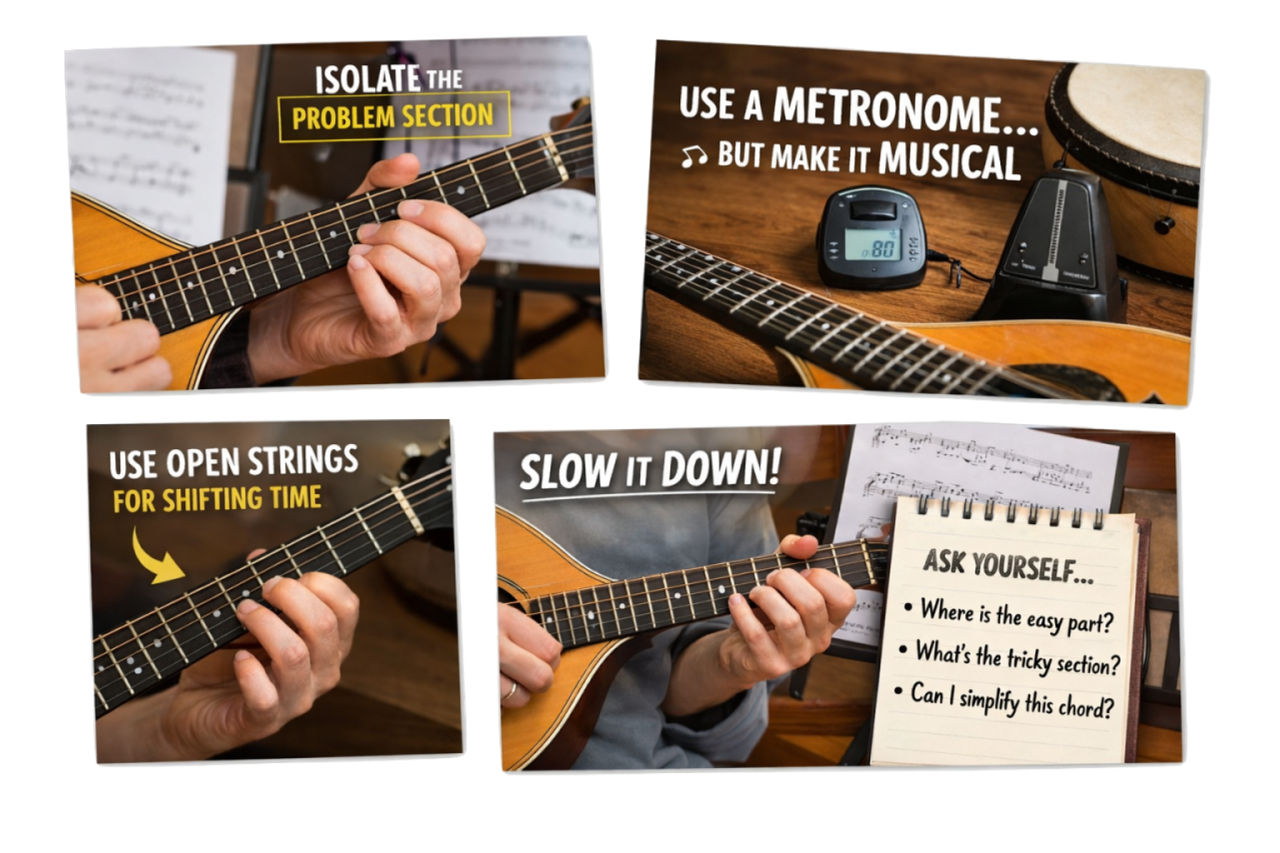
A useful technique is to use open strings as moments of transition. When an open string rings, your fretting hand is momentarily free, allowing you to shift position without interrupting the flow of the music.
For example, when moving from the lower position into the higher melodic passage, the open strings provide just enough time to slide the hand smoothly up the neck. This keeps the phrase connected rather than sounding abrupt.
Many traditional bouzouki arrangements rely on open strings as natural “breathing spaces”. These moments allow the player to reposition the hand while keeping the music flowing smoothly.
Handling Position Shifts
One of the trickiest moments in the tune occurs when moving from a higher F-sharp down to a lower position in order to prepare for the returning A chord. Without preparation, this shift can feel awkward and rushed.
A practical solution is to change where the note is played. Instead of always using the same fret position, you can move the note to a different string so that the hand is already closer to the upcoming chord shape.
This type of fingering choice is very common in traditional accompaniment playing. The goal is not simply accuracy, but efficiency and musical flow.
Always look one chord ahead. If the next shape requires your hand to move down the neck, consider shifting earlier so the movement feels natural rather than rushed.
Practice Routine
A structured practice routine will help you learn Lord Inchiquin far more efficiently. Instead of repeating the entire tune from beginning to end, focus on the specific areas that require the most coordination.
Start by playing the melody slowly on its own. Pay attention to the phrasing and ensure each note rings clearly. Once the melody feels comfortable, begin adding simple chord strums underneath.
Next, isolate the challenging sections. Practise the end of the first line repeatedly until the chord change feels automatic. Then move to the B section and practise the shift up the neck using a slow tempo.
Use a metronome or rhythmic backing track to keep the pulse steady. Gradually increase the tempo only when the movements feel relaxed and controlled. Rushing ahead too quickly often leads to tension in the hands.
Finally, reconnect the sections of the tune and play through the full arrangement. By this stage the difficult passages should feel much more manageable.
Key Takeaways
✅ Lord Inchiquin works beautifully as a melody-plus-chords arrangement on Irish bouzouki.
✅ The A section is harmonically simple and provides an excellent opportunity to practise blending melody with chord strumming.
✅ The B section introduces higher fret positions and requires smooth hand shifts along the neck.
✅ Open strings can act as transition moments that allow you to reposition your hand naturally.
✅ Breaking the tune into smaller sections and practising them slowly is the most effective way to master the piece.
FAQ
Is Lord Inchiquin Suitable For Beginner Bouzouki Players?
Yes, the A section is accessible for beginners, especially when played as a melody-only arrangement. The B section is slightly more advanced due to the higher position playing, but with slow practice it becomes manageable.
Should I Learn The Melody Or The Chords First?
Learning the melody first is usually the best approach. Once the melody is comfortable under your fingers, you can add the chord shapes underneath to create a fuller accompaniment.
Why Are Open Strings Important In Bouzouki Playing?
Open strings allow the instrument to ring naturally and provide brief moments where the fretting hand can reposition. This technique is widely used in Irish traditional accompaniment styles.
What Tempo Should I Practise This Tune At?
Begin at a slow tempo where every movement feels comfortable and controlled. Gradually increase the speed only when you can play the difficult sections cleanly without tension.
How Long Does It Usually Take To Learn This Tune?
For most players, the basic structure can be learned within a few practice sessions. Developing a smooth melody-plus-chords arrangement may take longer, particularly while refining the B section shifts.
Categories: : Irish Traditional Music
Did this article answer all your questions?
If you have any questions, or you want to learn more,
Click the Picture Below to Join the Community for FREE!