How to Learn All The Rage on Irish Bouzouki
 Declan Plummer
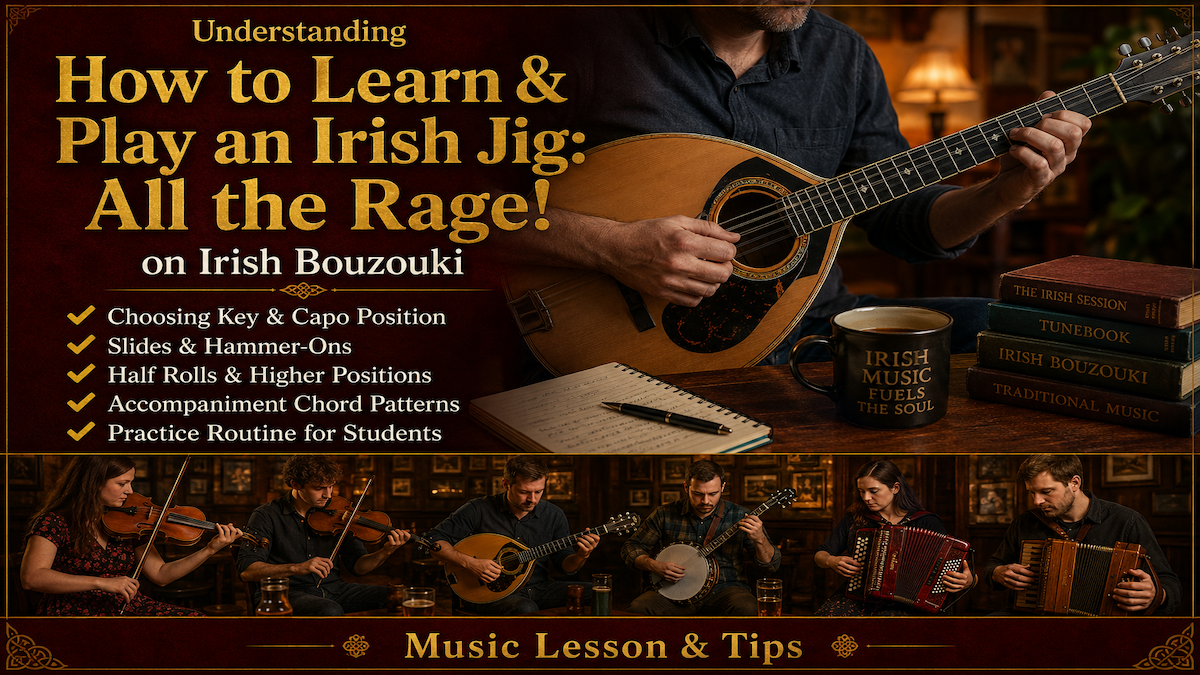
Learn “All The Rage” on Irish bouzouki with tips on capo use, slides, hammer-ons, ornaments, practice speed and accompaniment.
How To Learn “All The Rage” On Irish Bouzouki
“All The Rage” is an excellent Irish bouzouki tune because it combines open strings, slides, hammer-ons, position shifts and short ornamental figures. The main lesson is to learn the melody slowly, understand where the tune sits under the fingers, and practise the difficult bars separately before adding speed or accompaniment.
Learning Irish traditional music on bouzouki is not only about memorising notes. A tune such as “All The Rage” asks the player to think carefully about fingering, capo position, tone, picking direction and the relationship between written pitch and practical instrument layout. This is especially important when moving between comfortable keys and less familiar keys.
In this lesson, the tune is approached as a practical study in how to learn a new Irish melody on bouzouki. The focus is not on rushing towards a polished performance, but on showing the real process of working out a tune: identifying technical problems, testing fingerings, slowing down awkward sections and using accompaniment or looping tools to make practice more efficient.
The tune is especially useful because it feels well suited to the bouzouki. Many notes fall naturally on open strings, yet the melody still contains enough challenges to improve your technique. That balance makes it a strong learning piece for students who want to develop confidence beyond simple chordal accompaniment.
- Learn the tune slowly before trying to play it at full Irish session speed.
- Use hammer-ons, slides and half rolls only where they support the phrase naturally.
- Practise difficult bars out of context before putting the whole tune together.
Choosing The Key And Capo Position
One of the first decisions in learning “All The Rage” is whether to play it in D or to use a capo and sound in E. On the page, the tune can be treated as if it is in D, which is a familiar and comfortable area for many Irish bouzouki players. However, placing the capo on the second fret raises the sounding pitch and gives the instrument a brighter colour.
This creates an important learning situation. You may still think in the shapes and fingerings of D, but the actual sound will be E. That can be very useful, provided you are clear about what the capo is doing. The open first course that would normally give you D now gives you E. The shapes feel familiar, but the pitch has moved.
The risk is that the fretboard markers may no longer guide you in the way you expect. When using a capo, it is often better to count frets from the capo rather than from the nut. This keeps your thinking practical. For example, a note described as the seventh fret above the capo should be located relative to the capo, not relative to the original open instrument.
PRO TIP:
When using a capo, think of the capo as your new nut. Count fret distances from the capo so that your fingering remains clear and consistent.
Learning The A Section Slowly
The A section begins with a figure that sits strongly on the first course. This is one of the reasons the tune feels so natural on bouzouki. Rather than forcing the melody across awkward string crossings, the opening idea can be played with a combination of open strings, repeated notes and light hammer-ons.
The first important technical decision is where to use hammer-ons. When a phrase contains repeated notes, it can sound stiff if every note is picked in exactly the same way. A hammer-on gives the line a more fluent traditional character and also helps the right hand avoid unnecessary tension.
In the opening bars, the second note of the phrase can be treated as a hammer-on. This creates a smoother sound and gives the melody a little more life. The point is not to add ornamentation randomly, but to choose places where the technique supports the rhythm and the shape of the phrase.
The third bar is more straightforward. It alternates between an open first course and notes on the second course. This is where the bouzouki layout becomes useful. The open string gives you time to move the left hand, and the alternation between strings creates a clear, ringing texture.
PRACTICE BOX:
Take the first two bars only. Play them slowly, first with every note picked, then with the hammer-on included. Listen carefully for which version sounds more natural and relaxed.
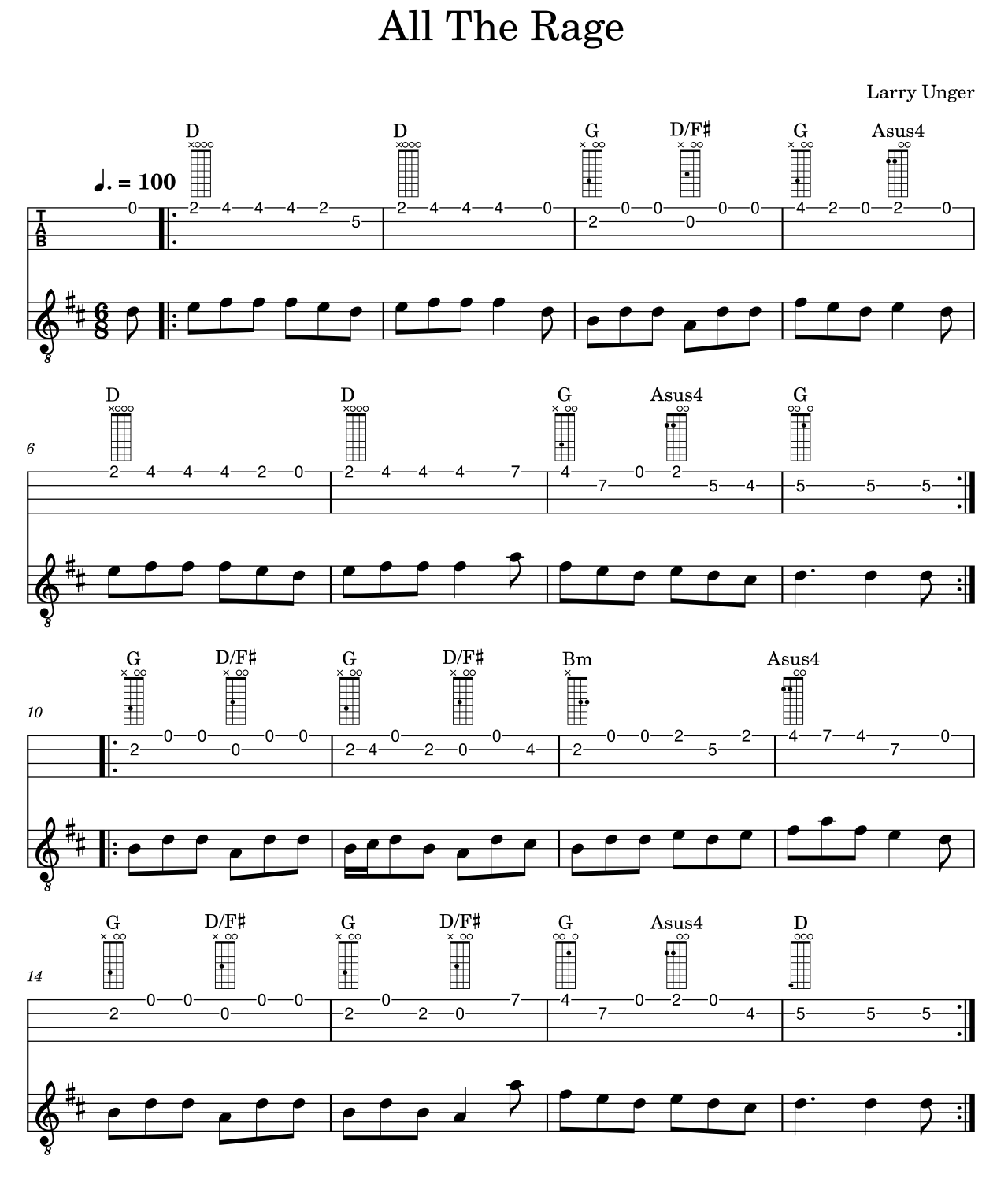
A Section Structure
| Area | Main Focus | Practice Aim |
|---|---|---|
| Opening Bars | Hammer-on on repeated-note figure | Make the phrase smooth without rushing |
| Middle Of A Section | Open strings and second-course movement | Keep tone even across both courses |
| End Of Phrase | Slide into higher position | Prepare the hand position before the next phrase |
Using Slides Instead Of Hammer-Ons
A key detail in “All The Rage” is knowing when not to use a hammer-on. The first time through a phrase, a hammer-on may feel natural. However, the second time around, the melody may need to move into a higher position. In that case, a slide can be a better technical solution.
The reason is simple: the slide prepares the hand for the next note. If you stay in the lower position and use another hammer-on, you may be forced into an awkward jump immediately afterwards. Sliding up allows the left hand to arrive where it needs to be before the next melodic idea begins.
This is one of the most important lessons in the tune. Fingering is not just about the note you are playing now. It is also about the note that comes next. A good fingering makes the phrase easier, cleaner and more musical. A poor fingering may work for one note but create a problem one beat later.
COMMON MISTAKE:
Do not automatically use the same hammer-on every time the phrase returns. If the next note requires a higher position, slide instead and let the slide prepare the hand.
Learning The B Section
The B section of “All The Rage” is slightly unusual because it does not simply rise higher in the expected way. In much Irish traditional music, the second part of a tune often feels brighter or higher in register. Here, the second half has a lower character in places, which gives the tune a distinctive shape.
The main technical feature in the B section is a small triplet-like ornament. This involves a quick movement from the second course towards the first course, with a hammer-on included. At slow speed, this figure may sound slightly plain or even awkward, but at a more suitable tempo it becomes much more effective.
The important point is not to force the ornament before the basic phrase is secure. First learn the notes. Then add the hammer-on. Then place the figure back into the phrase. If you try to begin with the ornament before understanding the melodic shape, the rhythm will probably become uneven.
INSIGHT / QUOTE BOX:
A tune becomes easier when you stop treating every bar equally. Find the two or three bars that actually cause trouble, and spend most of your practice time there.
Ornamentation: Half Rolls, Triplets And Picking
Once the melody is secure, the next stage is ornamentation. In this tune, the most useful ornaments are hammer-ons, slides, a short triplet-like figure and a half roll at the end of certain phrases. These should be added carefully, because ornaments are only effective when they fit the rhythm.
The half roll can be understood as a quick ornamental turn around a longer note. In written rhythm, it may resemble two semiquavers followed by a quaver, but in Irish traditional playing it is often felt more as a gesture than as a strictly mechanical subdivision. The sound should be light and rhythmically placed.
For the picking hand, one useful motion is up, down, up, played quickly and focused on the first course. The ornament should not interrupt the flow of the tune. If it causes tension, slow the phrase down and practise the roll on its own before putting it back into context.
Rhythm Pattern Box
Half Roll Feel: long note becomes a quick ornamental gesture.
Picking Idea: up – down – up.
Practice Aim: keep the ornament rhythmically light rather than heavy or forced.
If the ornament does not work immediately, leave it out temporarily. A clean plain melody is always better than a decorated version that loses time. Once the tune is steady, ornaments can be reintroduced gradually.
Choosing The Right Practice Speed
Speed matters enormously when learning a new Irish tune. If the tempo is too fast, your fingers will guess and your rhythm will collapse. If the tempo is too slow, the tune may lose energy and become difficult to feel as dance music. The best tempo is slow enough to control, but lively enough to keep the phrase moving.
For a jig, a very slow practice speed can be useful at the beginning. A tempo around 70 to 90 beats per minute may help you isolate a difficult phrase. However, once the notes are under the fingers, moving towards 100 or 105 can restore a better sense of lift.
A faster tempo such as 120 may be suitable later, but it is too quick when the tune is still new. The aim is not to prove that you can force your way through the melody. The aim is to build a version that remains rhythmically secure as the tempo increases.
PRACTICE BOX:
Start the tune at a tempo where you can play the difficult bars three times in a row without stopping. Only increase the speed when the phrase feels controlled.
Why Difficult Keys Are Worth Practising
It is tempting to remove the capo and play everything in D, especially on an instrument tuned in a way that makes D feel natural. However, staying permanently in comfortable keys can limit your development. “All The Rage” becomes especially valuable when it pushes you into a less familiar fretboard area.
Playing in E with a capo on the second fret may feel disorientating at first. The fret markers may not line up with your habits, and notes may seem to fall between the places where your hand wants to go. That discomfort is not a reason to avoid the key. It is part of the learning process.
A tune that challenges your usual shapes can improve your fretboard knowledge. It forces you to listen more carefully, count positions more accurately and break free from automatic finger habits. This is particularly useful for Irish bouzouki players who want to move beyond accompaniment patterns and become more confident melodic players.
Creating Simple Bouzouki Accompaniment
After working through the melody, the next step is to explore accompaniment. The simplest approach is to begin with open, steady chord shapes and avoid crowding the tune. Because “All The Rage” already has a clear melodic identity, the accompaniment should support the rhythm without overpowering the line.
A useful starting point is to work with fifth-based shapes and small moving figures. For example, a line can move down from one fret to another on the third course, include a hammer-on, and then settle into a stable fifth chord. This creates movement without making the accompaniment too busy.
The second time around, the direction can be reversed or slightly varied. This keeps the accompaniment alive while still remaining connected to the tune. The aim is not to create the most complex chord arrangement possible, but to find something that sits comfortably on the instrument and respects the melody.
Chord Progression Box
Simple Accompaniment Idea:
Use open fifth shapes, small descending or ascending bass movements, and occasional hammer-ons to give the accompaniment shape.
Musical Aim: support the jig rhythm while leaving enough space for the melody to speak clearly.
More advanced accompaniment can then be built from this plain version. You might add higher notes, change the direction of a line, or create a more active response to the melody. However, the plain version should always remain playable. If the advanced version becomes rhythmically unstable, return to the simpler pattern.
Recording And Listening Back
Recording yourself is one of the most effective ways to improve. When playing, it is easy to miss small timing problems, unclear ornaments or rushed slides. Listening back gives you a more honest picture of what is happening.
A short recording is enough. You do not need a perfect studio take. Record one full play-through, then listen for the main issues. Did the slide happen in the right place? Did the half roll fit the beat? Did the triplet figure stay clear? Did the tempo remain steady?
Looping a short section can also speed up learning. Instead of repeatedly restarting a full track, isolate the difficult two bars and let them repeat. This helps the ear and the fingers absorb the phrase more efficiently.
INSIGHT / QUOTE BOX:
Short, repeated listening is often more useful than one long unfocused practice session. Loop the problem, solve the problem, then return to the tune.
Practice Routine For Learning The Tune
Begin by listening to the tune several times without playing. Try to hear the overall shape of the A section and B section. Notice where the phrases repeat, where the melody rises, and where the tune moves into a more awkward position.
Next, learn the opening two bars slowly. Decide where the hammer-on belongs and practise the phrase until it feels comfortable. Do not move on too quickly. The first bars establish the technique and tone for the rest of the tune.
Then practise the slide into the higher position. This should be treated as a separate exercise. Repeat the slide and the following note until the left hand knows where it is going. Count from the capo if you are using one.
After that, learn the B section without ornamentation. Once the notes are secure, add the triplet-like hammer-on figure. If it sounds clumsy at slow speed, do not worry. Bring it gradually up to a tempo where the ornament makes musical sense.
When both sections are playable, practise with a slow accompaniment track or bodhrán rhythm. Start around 70 to 90 if necessary, then move towards 105 when the tune begins to settle. Avoid jumping straight to session speed.
Finally, record yourself playing the tune once through. Listen back and choose only one thing to improve. It might be the slide, the half roll, the triplet or the tempo. Fix that one issue, then record again.
Key Takeaways
Key Takeaways
✅ “All The Rage” suits Irish bouzouki because it uses open strings while still offering useful technical challenges.
✅ Hammer-ons should be chosen carefully, especially when repeated notes need a smoother musical shape.
✅ Slides are essential when they help the hand move into the correct position for the following note.
✅ Practising in E with a capo can feel awkward, but it improves fretboard awareness and breaks over-reliance on familiar D shapes.
✅ Short, focused practice on difficult bars is more effective than repeatedly playing the whole tune with the same mistakes.
FAQ
Is “All The Rage” A Good Tune For Irish Bouzouki?
Yes. It is a strong tune for Irish bouzouki because many notes fall naturally on open strings, but it still includes enough slides, hammer-ons and position shifts to make it musically and technically worthwhile.
Should I Learn The Tune In D Or E?
You can learn the shapes in D and then use a capo on the second fret to sound in E. If you are still new to the tune, begin with the version that helps you understand the melody most clearly.
What Is The Hardest Part Of The Tune?
The most common difficulties are remembering the slide into the higher position, finding the seventh fret above the capo accurately, and placing the triplet-like ornament cleanly in the B section.
How Fast Should I Practise This Jig?
Start slowly enough to control the difficult bars. A tempo around 70 to 90 can help with early practice, while 100 to 105 may feel more musical once the tune becomes familiar.
Should I Add Ornaments Straight Away?
No. Learn the plain melody first. Add hammer-ons, slides, half rolls and triplet figures only after the rhythm and fingering are secure. A clean simple version is always better than an ornamented version that loses time.
To take your learning to the next level,
check out some of these amazing Courses & Apps




Categories: : Irish Traditional Music
Did this article answer all your questions?
If you have any questions, or you want to learn more,
Click the Picture Below to Join the Community for FREE!